

Categories
home buying tips

Choosing the Right Real Estate Agent: A Guide to Finding Your Perfect Match

Hey there, future homeowner or savvy seller! Let’s talk real estate agents. You know, the folks who help make your property dreams a reality. 🏡 We’ve all heard how crucial it is to have a great real estate agent by your side, but what does that actually mean? And how do you find that perfect match? 🤔

This blog post is your ultimate guide to navigating the world of real estate agents, helping you confidently choose the one who’s right for you.

Understanding Your Needs and Goals

First things first, let’s get clear on what you’re looking for.

  • Are you buying your dream home or selling your current one? Agents have different responsibilities for each.
  • What kind of property are you after? A cozy condo, a spacious family home, or maybe an investment property?
  • Where do you see yourself living? What location makes your heart sing?
  • What’s your budget and timeline? Having a realistic idea of these will help your agent find the best options for you.
  • What are your must-haves? Think school districts, commute times, or a backyard big enough for epic barbeques. These are crucial details to share with your agent from the get-go.

Once you’ve got a good grasp of your own needs and goals, you’re ready to start looking for an agent who can help you achieve them!

What Makes a Top-Performing Real Estate Agent?

Now that you know what you want, let’s talk about the qualities that set amazing real estate agents apart from the rest.

  • Availability and Communication: Your agent should be your go-to person, someone you can easily reach and who keeps you in the loop every step of the way. Think prompt responses to calls, emails, and texts.
  • Expertise and Market Knowledge: You want an agent who’s a true local expert. They should know the neighborhood trends, property values, and the ins and outs of the market like the back of their hand.
  • Strong Negotiation Skills: Let’s face it, negotiating can be tough. A skilled agent will fight for your best interests and make sure you get the best possible price, whether you’re buying or selling.
  • Professionalism and Integrity: Trust is everything in real estate. You want an agent who’s honest, ethical, and always puts your needs first.
  • Technology Proficiency: In today’s digital world, tech-savvy agents have a serious edge. Think digital signatures, virtual tours, and online marketing strategies that get your property seen.
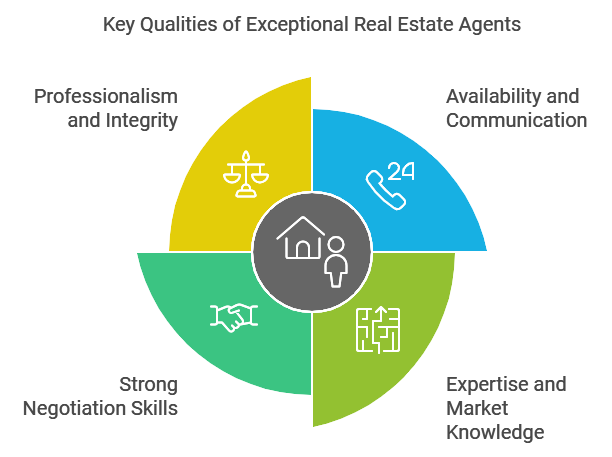
A circular diagram describing the key qualities of exceptional real estate agents

Finding Your Niche: Specialization and Expertise

Did you know some agents specialize in certain types of properties or markets? 

  • Property Type Specialists: If you’re after a luxury home, a condo, or an investment property, there are agents who focus specifically on those areas.
  • Niche Market Experts: Maybe you’re looking for an eco-friendly home, a historic property, or a vacation rental. Yep, there are experts for that too!

Working with an agent who understands the nuances of your specific needs can be a game-changer.

Questions You Need to Ask A Real Estate Agent

Don’t be shy—interviewing potential agents is essential. Here are some key questions to get you started:

  • Experience and Track Record:
    • How many homes have you sold in the past year?
    • What’s your average list-to-sale price ratio? This tells you how close they get to asking prices.
    • Can you provide references from past clients? Hearing from others can give you valuable insights.
  • Market Expertise:
    • How do you stay up-to-date on current market trends?
    • What are your insights on the current state of the market in this area?
  • Communication and Availability:
    • Do you have set hours or are you available 24/7? While you don’t want to be texting them at 3 am, responsiveness is key!
    • How often will you communicate with me throughout the process?
  • Negotiation Strategy:
    • Can you share an example of a time when you had to put your negotiating skills to the test? Real-life examples speak volumes.
    • How will you advocate for my best interests during negotiations?
  • Marketing and Technology:
    • Can you walk me through a marketing plan you created for a similar property? Get a feel for their creativity and strategy.
    • What technology tools do you use to make the buying or selling process smoother?
  • Additional Questions:
    • How do you handle multiple offer situations? This is crucial in a competitive market.
    • What’s your strategy for finding homes in a low-inventory market? Resourcefulness is key!
    • How do you ensure a smooth closing process? You want someone who dots their i’s and crosses their t’s.

Checking the Buzz: Agent Reviews and Testimonials

Online reviews and testimonials can be a goldmine of information. They offer a glimpse into real client experiences. Look for patterns—do people consistently praise their communication skills, negotiation prowess, or market knowledge?

On the flip side, watch out for red flags like complaints about unresponsiveness, unprofessional behavior, or a lack of follow-through.

Remember to take reviews with a grain of salt. One person’s dream agent might not be the right fit for you. Look for reviews that resonate with your own priorities and preferences.

Talking Money: Agent Fees and Compensation

It’s important to have an open conversation about agent fees and compensation.

  • Different Fee Structures: Agents typically work on a commission basis, but you might also encounter flat fees or tiered pricing.
  • Factors Influencing Fees: An agent’s experience, the services they provide, the market you’re in, and the complexity of the transaction can all impact their fees.
  • Negotiating Fees: You can always try to negotiate fees! Just remember that you’re paying for expertise and valuable services.

Finding the Right Fit: The Human Element

This is more than just checking boxes on a list. It’s about finding someone you connect with on a personal level.

  • Beyond Transactions: A great agent is more than just a facilitator; they’re a trusted advisor and advocate who truly cares about your success.
  • Trust and Empathy: You want an agent who listens to your concerns, understands your needs, and provides support throughout the journey, even when things get stressful.
  • Clear Communication: Open and honest communication is essential. You should feel comfortable asking questions, expressing concerns, and knowing that your agent will always be upfront with you.

Ultimately, you want an agent who will go above and beyond to make your experience as smooth and rewarding as possible.

A Digital World: The Evolving Role of Agents

The real estate landscape is constantly evolving, especially with the rise of online platforms.

While you can now browse listings and research neighborhoods online, agents are still invaluable resources. They offer expert insights, data-driven analysis, and strategic negotiation skills that you can’t get from a website.

Today’s agents are embracing technology to enhance their services, streamline processes, and provide a more personalized client experience.

The Legal and Ethical Side: What You Need to Know

Real estate transactions involve legal and ethical considerations that are important to be aware of.

  • Disclosure Requirements: Agents are legally obligated to disclose any information that could impact the transaction, such as conflicts of interest or material facts about the property.
  • Fair Housing Laws: Agents must adhere to fair housing laws and treat all clients equally, regardless of their race, religion, national origin, or other protected characteristics.
  • Data Privacy: With the increasing use of technology, it’s crucial to ensure that your agent safeguards your personal information and respects your privacy.
  • Ethical Conduct: Hold your agent to high ethical standards and report any suspected violations to the appropriate authorities.f

Our Recommendation...

Choosing the right real estate agent is a big decision. A great agent can make the entire process smoother, more efficient, and ultimately more rewarding.

Ready to start your real estate journey with a trusted and experienced team? Contact Ace Realty today at 403-472-3909. Let their expert agents guide you every step of the way and help you find the perfect property or buyer to match your needs.

Happy house hunting (or selling)!
Categories
First-Time Buyers

The Steps Involved in Closing the Buying Process of a Home in Calgary,AB

The process of buying a home in Calgary, Alberta, is both thrilling and challenging. As a prospective homeowner, knowing what to expect and understanding the essential steps in the closing process will give you the confidence needed to navigate your purchase smoothly.

The typical timeframe for closing can range from 30 to 90 days, depending on factors like negotiations and legal considerations. Let’s dive deep into what each step entails and what to expect during this crucial stage of your home-buying journey.

Engage a Real Estate Lawyer

Hiring a real estate lawyer is one of the most crucial steps when closing a home purchase in Calgary. Your lawyer plays a pivotal role in reviewing all legal documents, ensuring compliance with provincial laws, and protecting your interests. Real estate transactions can be complicated, and a skilled lawyer will guide you through every legal hurdle.

Engaging a lawyer early ensures they have enough time to review documents like the purchase agreement and title deeds. Alberta’s legal framework is distinct, and having a professional versed in local regulations is essential for a smooth transaction. Your lawyer will also work with you on other matters like mortgage documents and title insurance to guarantee you are protected from any legal pitfalls.

Register for our next Meet & Greet and meet experts like real estate lawyers, mortgage brokers and others. Click here to RSVP.

Review Purchase Agreement

Once an offer is accepted on a home, the next critical step is to review the purchase agreement. Your real estate lawyer will carefully examine this document to ensure that all terms are clear and beneficial. They will ensure the agreement covers essential items like the condition of the home, repairs, and inclusions or exclusions.

Additionally, your lawyer verifies details about the property to ensure there are no issues that could complicate the sale. For instance, they will check for any liens, judgments, or claims against the property. Ensuring all these legal matters are addressed before moving forward helps you avoid unexpected surprises down the line.

Conduct Due Diligence

Due diligence is an integral part of buying a home in Calgary. This process involves checking that all aspects of the property and transaction are in good standing. During this stage, your lawyer will review property taxes, outstanding utility bills, and any municipal permits that may affect your home purchase.

For instance, if a homeowner conducted renovations without proper permits, it could present legal or financial headaches later. Additionally, your lawyer will verify that there are no outstanding municipal taxes or legal claims against the property. If issues are found, they will work with the seller to resolve them before the deal moves forward.

Do a Final Walkthrough

Before closing day, conducting a final walkthrough of the property is your last chance to inspect the home and ensure everything is in order. This includes confirming that any repairs agreed upon during the negotiation process have been completed and that the house’s overall condition has not changed since your last viewing.

Take this opportunity to thoroughly inspect the home to avoid any surprises once the keys are handed over. If something isn’t right, communicate with your lawyer and agent immediately to address the issue before signing off on the deal.

Prepare for Closing Costs

Closing costs can come as a surprise for first-time homebuyers, but they are a necessary part of the process. In Calgary, these costs generally range from 2% to 4% of the purchase price. Common closing costs include legal fees, title insurance, land transfer taxes, and appraisal fees.

The largest sum you’ll need to prepare for is the down payment, which is due on closing day. Ensuring that you have a clear understanding of these costs early in the process will help avoid any last-minute financial stress.

Closing Day Preparation

The day has finally arrived—closing day! Both the buyer and seller need to present valid photo identification to verify their identities. Additionally, you, as the buyer, will need to provide your lawyer with a bank draft covering the total purchase price of the home and any additional fees like legal costs and adjustments for utilities or property taxes.

It’s crucial to be organized on this day. Gather all required documents, communicate with your lawyer and real estate agent, and be prepared for any last-minute instructions they may provide.

Sign Legal Documents

On closing day, numerous legal documents require your signature. These documents include the mortgage agreement, the transfer of title, and other essential forms. It’s important to take your time to understand what you are signing, as these documents often carry long-term financial and legal obligations.

Your real estate lawyer will be there to guide you through the signing process, explain each document, and answer any last-minute questions you may have. This step formalizes your ownership and ensures that all terms agreed upon are legally binding.

Get our FREE Home Buyers Glossary to help you understand the real estate jargon. This will help you make informed decisions during your home buying journey.

Transfer of Funds

Once all paperwork is signed, your lawyer will handle the funds transfer. The buyer’s lawyer sends the money to the seller’s lawyer. In turn, the seller’s lawyer ensures all remaining debts or obligations tied to the property are settled before transferring the remaining funds to the seller.

This step marks the formal completion of the financial aspect of the transaction. However, ownership is not officially transferred until the title is registered in your name.

Registration of Title

The official transfer of ownership happens when your lawyer registers the title with the land titles office. This step is crucial as it ensures that the home is legally yours, free of any claims or liens. The registration process can take several days, but it is essential to ensure there are no errors during this stage.

Once the title is registered, your lawyer will notify you, and the home is legally yours.

Receive Keys and Final Report

With everything in place, the last step is receiving the keys to your new home. Typically, this happens shortly after the funds have been transferred and the title has been registered. This moment is often the most exciting part of the process!

Approximately six weeks after the closing, you will receive a final report from your lawyer. This document details all financial transactions related to the sale and confirms the transfer of title and other key legal aspects. Keep this report in a safe place, as it can be useful for future reference.

What Else to Expect During the Closing Process in Calgary, AB

the closing process for a home in Calgary requires patience, preparation, and understanding. Here’s a quick summary of what to expect throughout this journey:

Timeline

The entire process from the acceptance of an offer to closing typically takes between six and eight weeks, though some closings may take up to 90 days. The timeline depends on several factors, including the speed of legal reviews and financial approvals.

Costs

It’s important to budget for closing costs beyond just the purchase price of the home. Prepare for legal fees, title insurance, taxes, and various administrative costs. Planning for these ahead of time will make the process less stressful.

Documentation

Ensure that all documentation is accurate and complete before signing. Missing or incorrect documents can cause delays and complications on closing day.

Communication

Keep in touch with your real estate agent and lawyer throughout the process. Regular communication will help ensure you stay informed and that any issues are addressed promptly.

Frequently Asked Questions About Closing

What is the role of a real estate lawyer in Calgary’s home-buying process?
A real estate lawyer ensures all legal documents are in order, protects your interests, and oversees the financial and title transfer during closing.

How long does it take to close on a home in Calgary?
The typical closing process takes six to eight weeks but can extend up to 90 days based on various factors.

What costs should I budget for during closing?
Closing costs in Calgary range from 2% to 4% of the home’s purchase price and can include legal fees, title insurance, and administrative costs.

When do I get the keys to my new home?
You will receive the keys after the funds have been transferred, and the title is officially registered in your name.

What happens if there are issues with the property during the final walkthrough?
If any issues arise during the final walkthrough, contact your lawyer and agent immediately to resolve them before closing.

Is title insurance necessary in Calgary?
Title insurance is not mandatory but highly recommended to protect you from potential future claims against your home.

In Conclusion...

The closing process when purchasing a home in Calgary, Alberta, is a detailed and structured journey. By understanding each step—from engaging a real estate lawyer to signing legal documents and registering the title—you can confidently navigate the process and enjoy the satisfaction of becoming a homeowner.

With proper preparation and clear communication, your home-buying experience will be a positive and rewarding milestone. We want to help you out with our FREE Home Buyers Glossary. This downloadable document will help you understand all the terms you need to know during your home search,processing and closing on buying your home. Grab it now here.

Best wishes on your home buying journey!