
Categories
home buying tips

Choosing the Right Real Estate Agent: A Guide to Finding Your Perfect Match

Hey there, future homeowner or savvy seller! Let’s talk real estate agents. You know, the folks who help make your property dreams a reality. 🏡 We’ve all heard how crucial it is to have a great real estate agent by your side, but what does that actually mean? And how do you find that perfect match? 🤔

This blog post is your ultimate guide to navigating the world of real estate agents, helping you confidently choose the one who’s right for you.

Understanding Your Needs and Goals

First things first, let’s get clear on what you’re looking for.

  • Are you buying your dream home or selling your current one? Agents have different responsibilities for each.
  • What kind of property are you after? A cozy condo, a spacious family home, or maybe an investment property?
  • Where do you see yourself living? What location makes your heart sing?
  • What’s your budget and timeline? Having a realistic idea of these will help your agent find the best options for you.
  • What are your must-haves? Think school districts, commute times, or a backyard big enough for epic barbeques. These are crucial details to share with your agent from the get-go.

Once you’ve got a good grasp of your own needs and goals, you’re ready to start looking for an agent who can help you achieve them!

What Makes a Top-Performing Real Estate Agent?

Now that you know what you want, let’s talk about the qualities that set amazing real estate agents apart from the rest.

  • Availability and Communication: Your agent should be your go-to person, someone you can easily reach and who keeps you in the loop every step of the way. Think prompt responses to calls, emails, and texts.
  • Expertise and Market Knowledge: You want an agent who’s a true local expert. They should know the neighborhood trends, property values, and the ins and outs of the market like the back of their hand.
  • Strong Negotiation Skills: Let’s face it, negotiating can be tough. A skilled agent will fight for your best interests and make sure you get the best possible price, whether you’re buying or selling.
  • Professionalism and Integrity: Trust is everything in real estate. You want an agent who’s honest, ethical, and always puts your needs first.
  • Technology Proficiency: In today’s digital world, tech-savvy agents have a serious edge. Think digital signatures, virtual tours, and online marketing strategies that get your property seen.
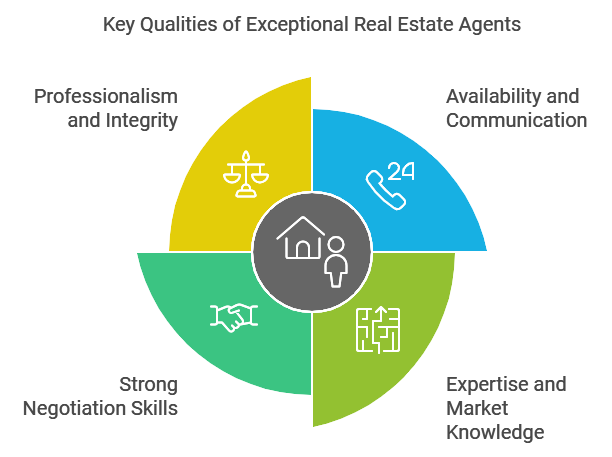
A circular diagram describing the key qualities of exceptional real estate agents

Finding Your Niche: Specialization and Expertise

Did you know some agents specialize in certain types of properties or markets? 

  • Property Type Specialists: If you’re after a luxury home, a condo, or an investment property, there are agents who focus specifically on those areas.
  • Niche Market Experts: Maybe you’re looking for an eco-friendly home, a historic property, or a vacation rental. Yep, there are experts for that too!

Working with an agent who understands the nuances of your specific needs can be a game-changer.

Questions You Need to Ask A Real Estate Agent

Don’t be shy—interviewing potential agents is essential. Here are some key questions to get you started:

  • Experience and Track Record:
    • How many homes have you sold in the past year?
    • What’s your average list-to-sale price ratio? This tells you how close they get to asking prices.
    • Can you provide references from past clients? Hearing from others can give you valuable insights.
  • Market Expertise:
    • How do you stay up-to-date on current market trends?
    • What are your insights on the current state of the market in this area?
  • Communication and Availability:
    • Do you have set hours or are you available 24/7? While you don’t want to be texting them at 3 am, responsiveness is key!
    • How often will you communicate with me throughout the process?
  • Negotiation Strategy:
    • Can you share an example of a time when you had to put your negotiating skills to the test? Real-life examples speak volumes.
    • How will you advocate for my best interests during negotiations?
  • Marketing and Technology:
    • Can you walk me through a marketing plan you created for a similar property? Get a feel for their creativity and strategy.
    • What technology tools do you use to make the buying or selling process smoother?
  • Additional Questions:
    • How do you handle multiple offer situations? This is crucial in a competitive market.
    • What’s your strategy for finding homes in a low-inventory market? Resourcefulness is key!
    • How do you ensure a smooth closing process? You want someone who dots their i’s and crosses their t’s.

Checking the Buzz: Agent Reviews and Testimonials

Online reviews and testimonials can be a goldmine of information. They offer a glimpse into real client experiences. Look for patterns—do people consistently praise their communication skills, negotiation prowess, or market knowledge?

On the flip side, watch out for red flags like complaints about unresponsiveness, unprofessional behavior, or a lack of follow-through.

Remember to take reviews with a grain of salt. One person’s dream agent might not be the right fit for you. Look for reviews that resonate with your own priorities and preferences.

Talking Money: Agent Fees and Compensation

It’s important to have an open conversation about agent fees and compensation.

  • Different Fee Structures: Agents typically work on a commission basis, but you might also encounter flat fees or tiered pricing.
  • Factors Influencing Fees: An agent’s experience, the services they provide, the market you’re in, and the complexity of the transaction can all impact their fees.
  • Negotiating Fees: You can always try to negotiate fees! Just remember that you’re paying for expertise and valuable services.

Finding the Right Fit: The Human Element

This is more than just checking boxes on a list. It’s about finding someone you connect with on a personal level.

  • Beyond Transactions: A great agent is more than just a facilitator; they’re a trusted advisor and advocate who truly cares about your success.
  • Trust and Empathy: You want an agent who listens to your concerns, understands your needs, and provides support throughout the journey, even when things get stressful.
  • Clear Communication: Open and honest communication is essential. You should feel comfortable asking questions, expressing concerns, and knowing that your agent will always be upfront with you.

Ultimately, you want an agent who will go above and beyond to make your experience as smooth and rewarding as possible.

A Digital World: The Evolving Role of Agents

The real estate landscape is constantly evolving, especially with the rise of online platforms.

While you can now browse listings and research neighborhoods online, agents are still invaluable resources. They offer expert insights, data-driven analysis, and strategic negotiation skills that you can’t get from a website.

Today’s agents are embracing technology to enhance their services, streamline processes, and provide a more personalized client experience.

The Legal and Ethical Side: What You Need to Know

Real estate transactions involve legal and ethical considerations that are important to be aware of.

  • Disclosure Requirements: Agents are legally obligated to disclose any information that could impact the transaction, such as conflicts of interest or material facts about the property.
  • Fair Housing Laws: Agents must adhere to fair housing laws and treat all clients equally, regardless of their race, religion, national origin, or other protected characteristics.
  • Data Privacy: With the increasing use of technology, it’s crucial to ensure that your agent safeguards your personal information and respects your privacy.
  • Ethical Conduct: Hold your agent to high ethical standards and report any suspected violations to the appropriate authorities.f

Our Recommendation...

Choosing the right real estate agent is a big decision. A great agent can make the entire process smoother, more efficient, and ultimately more rewarding.

Ready to start your real estate journey with a trusted and experienced team? Contact Ace Realty today at 403-472-3909. Let their expert agents guide you every step of the way and help you find the perfect property or buyer to match your needs.

Happy house hunting (or selling)!
Categories
First-Time Buyers home buying tips

To Buy A Newly Built Home or an Existing Home? The Pros and Cons You Need to Consider.

In the pursuit of homeownership, one of the fundamental decisions you’ll face is whether to invest in a newly built home or opt for an existing home with its own unique charm. The choice between a newly built property and a pre-owned home comes with its own set of considerations, each presenting a distinctive set of advantages and drawbacks.

This article will walk you through the important factors to consider as you decide whats best for you, your lifestyle, and your future plans. So, let’s explore this classic dilemma together and find the perfect fit for your lifestyle and preferences!

Pros of Buying an Existing Home

Quick Move-In and Spacious Living

  1. Immediate Occupancy:
    Purchasing an existing home allows for quick move-in, eliminating the wait associated with new builds.
     
  2. More Land:
    Older homes often come with more extensive plots, offering additional space such as a spacious backyard or an extra bedroom.
     
  3. Craftsmanship:
    Decades-old homes may feature superior craftsmanship, showcasing the durability and quality of construction methods from that era.

Location and Community Considerations

  1. Better Location:
    Existing homes may be situated in established neighborhoods with better amenities, shorter commute times, and access to quality schools.

  2. Community Development:
    Older neighborhoods are less prone to ongoing construction, providing a stable and well-developed community atmosphere.

  3. Amenities and Quality Schools:
    Existing communities often offer mature amenities, well-established infrastructure, and access to reputable schools compared to new developments.


    Click here to learn if, ‘Buying A Home Will Help Your Credit Score’

Cons of Buying an Existing Home

  1. Maintenance Costs:
    Statistics show that homeowners spend, on average, 1-4% of their home’s value annually on maintenance and repairs (U.S. Census Bureau). Unexpected issues can arise, leading to additional expenses beyond routine upkeep.

  2. Depreciation Over Time:
    According to a study by Taylor and Francis Online, the value of older homes tends to depreciate, impacting their resale value. They quote that ‘the depreciation for an average property is approximately 2% per year, and a poorly maintained property has a depreciation factor of approximately 3% per year.’

    The factors that affect this include the building’s age, outdated features, or changing neighborhood dynamics, which may contribute to a decline in property value.


  3. Limited Customization:
    Existing homes may have design limitations, and significant renovations can be expensive. According to a survey by the National Association of Realtors, 35% of homebuyers cited the need for renovations as a primary reason for purchasing a new home rather than an existing one.


    While buying a home offers several advantages, considering these disadvantages is crucial for making an informed decision, balancing the benefits and potential drawbacks.

Pros of Buying A Newly Built Home

Customization and Modern Design

  1. Personalization Options:
    Buying a new home allows for customization, enabling buyers to choose finishes, layouts, and even architectural styles. According to the National Association of Home Builders (NAHB), 70% of new home buyers find the ability to customize their homes appealing.

          2. Contemporary Features:
            New homes often feature modern layouts, open floor plans, and high ceilings, catering to current design trends.
This appeals to homebuyers seeking a fresh and contemporary living experience.

Warranty Protection and Reduced Maintenance

Lower Maintenance Costs:
New homes require fewer immediate repairs and maintenance tasks than older homes. With modern construction materials and up-to-date systems, newly built homes often boast a higher level of durability and efficiency, reducing the need for frequent fixes and contributing to long-term savings on maintenance expenses.

Up-to-Date Safety Standards

  1. Modern Safety Features:
    New homes adhere to the latest building codes and safety standards. This includes advanced fire safety measures, secure electrical systems, and durable construction materials.


  2. Reduced Health Risks:
    According to the Environmental Protection Agency (EPA), newer homes are less likely to have issues like lead-based paint or asbestos, contributing to a healthier living environment.


Find out if ‘Buying A Home in Canada is a Good Investment’ by clicking here

Modern Comforts and Warranty Coverage

  1. Brand-New Appliances and Features:
    New homes offer the latest in modern amenities, including state-of-the-art appliances, cutting-edge fixtures, and contemporary designs. This ensures a high level of comfort and convenience for homeowners.


  2. Comprehensive Warranty Coverage:
    Homebuyers benefit from comprehensive warranty coverage, addressing concerns about various home components. This includes protection against appliance malfunctions, roofing problems, or structural issues. According to the Federal Trade Commission, most new home builders provide a builders warranty so that homeowners can take advantage of it.

Energy Efficiency and Customization

  1. Lower Utility Costs: 
    Energy-efficient designs in new builds contribute to lower heating and cooling costs. By incorporating the latest technologies, such as advanced insulation and high-performance windows, newly constructed homes provide a more comfortable living environment and result in substantial savings on monthly utility bills, aligning with the growing emphasis on sustainable and cost-effective homeownership.


  2. Personalized Touches:
    Early involvement in pre-construction allows buyers to incorporate personal touches, choose custom floorplans, and add unique features. This level of customization ensures that the home aligns perfectly with the homeowner’s preferences and lifestyle.

Financial Flexibility and Price Appreciation

  1. Flexible Payment Options:
    Purchasing a new home often comes with financial flexibility, with options to pay over time. This can ease the immediate financial burden on homebuyers.

  2. Reduced Pricing Uncertainty:
    New builds can offer reduced uncertainty in pricing compared to bidding wars in the resale market. Fixed prices and transparent contracts provide a clearer understanding of the total investment.

  3. Potential for Price Appreciation:
    According to Canadian Newswire, homes are expected to experience price appreciation in 2024. Investing in a new home can increase property value as overall real estate prices rise.


    While the advantages of buying a new home are compelling, homebuyers need to assess their priorities and preferences to make an informed decision based on their unique needs.


    Click here to learn if, ‘Buying A Home Will Help Your Credit Score’

Final Take Away

In the journey of deciding between a newly built home and existing home, understanding the nuances is pivotal.

New homes bring cutting-edge technology, customization options, and energy efficiency but have a higher initial cost and potential construction delays. On the other hand, existing homes offer immediate occupancy, mature landscaping, and unique craftsmanship but may require more maintenance.

We invite you to download our Calgary Home Buying Glossary Guide, to help you navigate the complex language of  realtors in the home buying process. It will breaksdown real estate jargon and empower you to make confident decisions in your homebuying process.

Arm yourself with knowledge and embark on a smoother, more informed homeownership journey. Click the link below to access your free guide:

Download the Calgary Home Buying Glossary Guide

May your homebuying adventure be as exciting as your new living space!