

Categories
home buying tips

Choosing the Right Real Estate Agent: A Guide to Finding Your Perfect Match

Hey there, future homeowner or savvy seller! Let’s talk real estate agents. You know, the folks who help make your property dreams a reality. 🏡 We’ve all heard how crucial it is to have a great real estate agent by your side, but what does that actually mean? And how do you find that perfect match? 🤔

This blog post is your ultimate guide to navigating the world of real estate agents, helping you confidently choose the one who’s right for you.

Understanding Your Needs and Goals

First things first, let’s get clear on what you’re looking for.

  • Are you buying your dream home or selling your current one? Agents have different responsibilities for each.
  • What kind of property are you after? A cozy condo, a spacious family home, or maybe an investment property?
  • Where do you see yourself living? What location makes your heart sing?
  • What’s your budget and timeline? Having a realistic idea of these will help your agent find the best options for you.
  • What are your must-haves? Think school districts, commute times, or a backyard big enough for epic barbeques. These are crucial details to share with your agent from the get-go.

Once you’ve got a good grasp of your own needs and goals, you’re ready to start looking for an agent who can help you achieve them!

What Makes a Top-Performing Real Estate Agent?

Now that you know what you want, let’s talk about the qualities that set amazing real estate agents apart from the rest.

  • Availability and Communication: Your agent should be your go-to person, someone you can easily reach and who keeps you in the loop every step of the way. Think prompt responses to calls, emails, and texts.
  • Expertise and Market Knowledge: You want an agent who’s a true local expert. They should know the neighborhood trends, property values, and the ins and outs of the market like the back of their hand.
  • Strong Negotiation Skills: Let’s face it, negotiating can be tough. A skilled agent will fight for your best interests and make sure you get the best possible price, whether you’re buying or selling.
  • Professionalism and Integrity: Trust is everything in real estate. You want an agent who’s honest, ethical, and always puts your needs first.
  • Technology Proficiency: In today’s digital world, tech-savvy agents have a serious edge. Think digital signatures, virtual tours, and online marketing strategies that get your property seen.
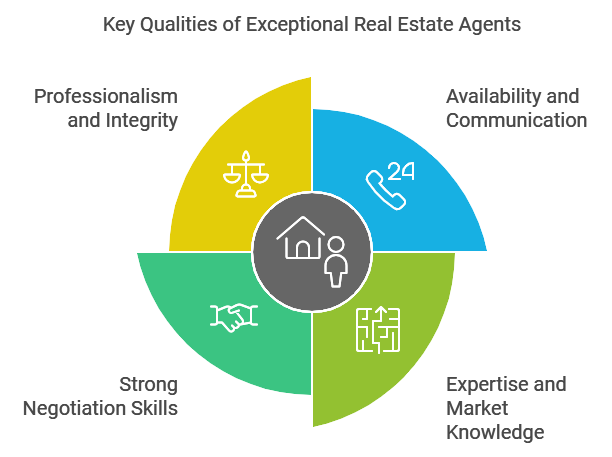
A circular diagram describing the key qualities of exceptional real estate agents

Finding Your Niche: Specialization and Expertise

Did you know some agents specialize in certain types of properties or markets? 

  • Property Type Specialists: If you’re after a luxury home, a condo, or an investment property, there are agents who focus specifically on those areas.
  • Niche Market Experts: Maybe you’re looking for an eco-friendly home, a historic property, or a vacation rental. Yep, there are experts for that too!

Working with an agent who understands the nuances of your specific needs can be a game-changer.

Questions You Need to Ask A Real Estate Agent

Don’t be shy—interviewing potential agents is essential. Here are some key questions to get you started:

  • Experience and Track Record:
    • How many homes have you sold in the past year?
    • What’s your average list-to-sale price ratio? This tells you how close they get to asking prices.
    • Can you provide references from past clients? Hearing from others can give you valuable insights.
  • Market Expertise:
    • How do you stay up-to-date on current market trends?
    • What are your insights on the current state of the market in this area?
  • Communication and Availability:
    • Do you have set hours or are you available 24/7? While you don’t want to be texting them at 3 am, responsiveness is key!
    • How often will you communicate with me throughout the process?
  • Negotiation Strategy:
    • Can you share an example of a time when you had to put your negotiating skills to the test? Real-life examples speak volumes.
    • How will you advocate for my best interests during negotiations?
  • Marketing and Technology:
    • Can you walk me through a marketing plan you created for a similar property? Get a feel for their creativity and strategy.
    • What technology tools do you use to make the buying or selling process smoother?
  • Additional Questions:
    • How do you handle multiple offer situations? This is crucial in a competitive market.
    • What’s your strategy for finding homes in a low-inventory market? Resourcefulness is key!
    • How do you ensure a smooth closing process? You want someone who dots their i’s and crosses their t’s.

Checking the Buzz: Agent Reviews and Testimonials

Online reviews and testimonials can be a goldmine of information. They offer a glimpse into real client experiences. Look for patterns—do people consistently praise their communication skills, negotiation prowess, or market knowledge?

On the flip side, watch out for red flags like complaints about unresponsiveness, unprofessional behavior, or a lack of follow-through.

Remember to take reviews with a grain of salt. One person’s dream agent might not be the right fit for you. Look for reviews that resonate with your own priorities and preferences.

Talking Money: Agent Fees and Compensation

It’s important to have an open conversation about agent fees and compensation.

  • Different Fee Structures: Agents typically work on a commission basis, but you might also encounter flat fees or tiered pricing.
  • Factors Influencing Fees: An agent’s experience, the services they provide, the market you’re in, and the complexity of the transaction can all impact their fees.
  • Negotiating Fees: You can always try to negotiate fees! Just remember that you’re paying for expertise and valuable services.

Finding the Right Fit: The Human Element

This is more than just checking boxes on a list. It’s about finding someone you connect with on a personal level.

  • Beyond Transactions: A great agent is more than just a facilitator; they’re a trusted advisor and advocate who truly cares about your success.
  • Trust and Empathy: You want an agent who listens to your concerns, understands your needs, and provides support throughout the journey, even when things get stressful.
  • Clear Communication: Open and honest communication is essential. You should feel comfortable asking questions, expressing concerns, and knowing that your agent will always be upfront with you.

Ultimately, you want an agent who will go above and beyond to make your experience as smooth and rewarding as possible.

A Digital World: The Evolving Role of Agents

The real estate landscape is constantly evolving, especially with the rise of online platforms.

While you can now browse listings and research neighborhoods online, agents are still invaluable resources. They offer expert insights, data-driven analysis, and strategic negotiation skills that you can’t get from a website.

Today’s agents are embracing technology to enhance their services, streamline processes, and provide a more personalized client experience.

The Legal and Ethical Side: What You Need to Know

Real estate transactions involve legal and ethical considerations that are important to be aware of.

  • Disclosure Requirements: Agents are legally obligated to disclose any information that could impact the transaction, such as conflicts of interest or material facts about the property.
  • Fair Housing Laws: Agents must adhere to fair housing laws and treat all clients equally, regardless of their race, religion, national origin, or other protected characteristics.
  • Data Privacy: With the increasing use of technology, it’s crucial to ensure that your agent safeguards your personal information and respects your privacy.
  • Ethical Conduct: Hold your agent to high ethical standards and report any suspected violations to the appropriate authorities.f

Our Recommendation...

Choosing the right real estate agent is a big decision. A great agent can make the entire process smoother, more efficient, and ultimately more rewarding.

Ready to start your real estate journey with a trusted and experienced team? Contact Ace Realty today at 403-472-3909. Let their expert agents guide you every step of the way and help you find the perfect property or buyer to match your needs.

Happy house hunting (or selling)!
Categories
home buying tips

Is Buying a Home in Canada a Good Investment? 5 Surprising Perks (and Pitfalls!) of Owning a Home in Canada

In the heart of every Canadian beats a yearning for homeownership. A 2023 CREA study found that 79% of Canadians believe owning a home is an important part of the Canadian dream. But amidst the idyllic visions, a crucial question lingers: is buying a home in Canada truly a good investment?

Keep reading to find out what the perks and the disadvantages of the investment potential of homeownership in Canada really are.


The Potential Advantages of Homeownership: A Glimpse Through the Rose-Colored Lens


These are the five main reasons that people seek to own a home (in Canada);

1). Financial Riches in Your Bricks and Mortar

Canadian home prices have historically climbed steadily, with Statistics Canada revealing an average house price increase of 12.2% in 2023 alone. This upward trajectory translates to the possibility of significant capital gains upon resale, padding your nest egg in the future. 


2). Tax Breaks for Your Sanctuary:

Owning your primary residence grants you access to the coveted Principal Residence Exemption. This Canada Revenue Agency gem shields any capital gains earned from its sale from the tax man. Additionally, you may be eligible to deduct a portion of your mortgage interest and property taxes, further reducing your annual tax burden.


3). A Home Builds Equity

Every mortgage payment isn’t just a financial obligation; it’s a tiny brick laid on the path to wealth accumulation. As you diligently make those payments, the portion of your home you own (aka equity) grows steadily, building a valuable asset that can be tapped into for future financial goals.


4). Stability and Control to Personalize Your Corner of the World

Renting comes with limitations, but homeownership unlocks the door to a world of possibilities. Imagine transforming your kitchen into a culinary haven, painting your living room in the hue of your dreams, and adding your personal touch to every corner of your space. It’s your canvas, ready for your creative masterpiece!

You also enjoy control when homeownership empowers you to be the master of your domain, dictating the temperature, noise levels, and overall atmosphere of your sanctuary. It’s a level of control that fosters a sense of independence and security.


5). A Legacy for Generations to Come

Owning a home isn’t just about the present; it’s about planting roots in which future generations can flourish. Whether it’s passed down to your children or cherished grandchildren, creating a lasting family legacy adds a heartwarming layer to the joys of homeownership.


The Challenges and Pitfalls of Owning a Home in Canada


Owning a home in Canada can be a rewarding experience, but it also comes with its own set of challenges and pitfalls. Here are some of the most significant risks and challenges to consider:

  1. High Entry Costs

    Buying a home in Canada requires a significant financial investment, including down payments, closing costs, and ongoing maintenance. These costs can be a barrier for many potential homeowners.

  2. Market Fluctuations

    The real estate market in Canada can be volatile, with price dips and negative equity risks. This means that the value of your home may decrease, leaving you with a financial loss.

  3. Debt Responsibility

    Owning a home comes with the burden of mortgage debt and vulnerability to interest rate hikes. This can make it difficult to manage your finances and may lead to financial stress.

  4. Personal Fit

    It’s essential to align homeownership with your career goals, family needs, and desired living environment. If your personal circumstances change, you may find yourself in a home that no longer suits your needs.

  5. Opportunity Cost

    Owning a home can limit travel, leisure, or career flexibility. You may need to stay in one place for an extended period to recoup the costs of buying and maintaining a home.


    By understanding these risks, you can make informed decisions and avoid costly mistakes when buying a home in Canada.


Beyond the Numbers: Making the Right Decision


The ultimate decision of whether to invest in a home is not in the costs and calculations. It’s a personal dance between your financial realities, innermost desires, and the life tapestry you’re weaving.
Here’s what you need to consider to make the right decision;


1). Self-Assessment: Take A Journey Within

Before signing on that dotted line, go on a journey of self-discovery and analyze;

  • Your financial health with clear eyes. Can you comfortably handle the down payment costs, closing fees, maintenance, and unexpected repairs? 
  • Assess your risk tolerance. Are you comfortable with the potential fluctuations of the housing market? 
  • Does the responsibility of homeownership align with your career goals, travel dreams, and desire for flexibility? Remember, owning a home shouldn’t come at the expense of your personal well-being and cherished goals.


2). The Heart Has Its Reasons

While logic serves as a wise guide, don’t dismiss the whispers of your heart. Homeownership can be a deeply emotional experience, offering a sense of security, belonging, and a space to express your unique identity. Acknowledge the emotional appeal, but ensure it doesn’t cloud your financial prudence. 


3). Seek Guidance for A Handheld Journey

Navigating the complex world of real estate doesn’t have to be a solitary trek. Seek the expertise of financial advisors, real estate agents, and mortgage professionals. Their knowledge and experience can act as a compass, ensuring your journey towards homeownership is informed and well-equipped.


FAQ about Homeownership in Canada


1. How much do I need for a down payment?

The minimum down payment for a home in Canada is typically 5% of the purchase price. However, a higher down payment (10-20%) can reduce your mortgage amount, monthly payments, and overall interest costs.


2. What are closing costs?

Closing costs are expenses associated with finalizing your mortgage and buying a home. These can include legal fees, land transfer taxes, title insurance, and appraisal fees. Costs can vary depending on the purchase price and location but typically range from 1.5% to 4% of the purchase price.


3. Can I afford a home?

This depends on your income, expenses, and existing debt. Consider using a mortgage affordability calculator to get a rough estimate of what you can afford. Ideally, your monthly housing costs shouldn’t exceed 39% of your gross income.


4. What are the tax benefits of homeownership?

Owning your primary residence offers tax advantages like the Principal Residence Exemption, which eliminates capital gains tax on the sale of your home. You may also be eligible to deduct mortgage interest and property taxes from your income tax.


5. Where can I get help with buying a home?

Several resources can assist you in your homeownership journey. Consult financial advisors, real estate agents, mortgage professionals, and government websites like the Canada Mortgage and Housing Corporation.


Final Take Away


Now that you’ve navigated the complexities of homeownership in Canada, are you ready to turn your Calgary dream into reality? At Jenga Homes, we’re passionate about empowering Calgarians like you to make informed decisions and experience a seamless journey toward becoming homeowners.

Our dedicated professionals offer comprehensive expertise in every aspect of Calgary real estate, from finding the perfect property that ticks all your boxes to navigating the intricacies of mortgages, paperwork, and closing costs.

Here’s what you can expect when you partner with us:

  • Get personalized guidance:
    We’ll take the time to understand your unique needs, goals, and budget, ensuring every step of the process feels tailored to you.
  • We have local expertise:
    Our deep knowledge of Calgary’s vibrant neighborhoods and evolving market trends will help you confidently make strategic decisions.
  • Enjoy seamless communication:
    We’ll be your trusted advisor every step of the way, keeping you informed, empowered, and stress-free throughout the process.
  • We have unwavering commitment:
    From the initial search to the keys in your hand, we’ll be by your side, celebrating your milestones and advocating for your best interests.

So, take that bold step towards homeownership in Calgary. Contact us today at Jenga Homes, and let our passionate professionals guide you through a smooth and rewarding journey toward owning your piece of the Calgary dream. 

Start your journey with our FREE download of, The Calgary Home Buying Glossary’ to help you navigate the process (and real estate jargon) easily. Click here to get your copy.

Categories
First-Time Buyers home buying tips

Will Buying A Home Help My Credit? Credit Score Secrets No One Told You (and It’s Not Scary!)

Ah, imagine the intoxicating aroma of freshly baked bread wafting from your kitchen, the sun dappling through leaves on your cozy patio, the laughter of loved ones echoing in a space that truly feels like your own. It’s the Canadian dream for many. 

But for first-time buyers, especially those navigating the unfamiliar landscape of a new country like Canada, the excitement of homeownership can be intertwined with a nagging worry.

“Will buying a home help my credit score?” 

This question whispers in the quiet moments, a potential roadblock on the path to realizing that dream.

Fear not, dear homebuyer-to-be! While the answer isn’t a simple “yes” or “no,” it’s a resounding “Yes, with a few crucial considerations.” This means that buying a home can be a powerful tool for building credit, but like a well-planned garden, it needs careful tending and understanding to flourish.

Let’s begin by demystifying the myths of credit-housing connection so that you can correctly and confidently conquer this financial milestone.


The Common Myths and Misconceptions about Homeownership and Credit Score

Credit Score Myth #1: Buying a Home automatically boosts your credit score overnight.

Reality: While taking on a mortgage can contribute positively to your credit history when managed responsibly, it’s not a magic wand. Consider it a slow and steady climb, not a rocket launch. Your credit score will respond to your consistent track record of on-time mortgage payments, building trust with lenders and boosting your score over time.


Credit Score Myth # 2:
You need a perfect credit score to buy a home.

Reality: While a good credit score is certainly beneficial, many lenders in Canada accept scores within a reasonable range and consider other factors like stable income and payment history.


Credit Score Myth #
3: Owning a home guarantees financial security and eliminates debt forever.

Reality: While homeownership offers long-term stability and potential equity growth, it also comes with ongoing maintenance costs and financial responsibilities. Managing your overall debt (including mortgage) wisely is crucial to true financial security.


Credit Score Myth #
4: Down payments are the credit score holy grail.

Reality: While a larger down payment reduces your borrowing amount and improves your debt-to-income ratio (a key credit score factor), it’s not the sole determinant. Responsible management of your existing debt and consistent mortgage payments also hold immense weight. Don’t overextend yourself for a bigger down payment if it compromises your financial stability.


Get more insights into credit scores in the article, ‘Demystifying the Canadian Credit Score: Your Key to Mortgage Approval.’


How to Build Your Credit Score for Homeownership

Now that you know the reality, let’s explore the best credit-boosting strategies you need to start on your homeownership journey:

  • Prioritize Payments like a Pro:

  • Your mortgage payment should be your first monthly payment. Make it your sacred monthly ritual, setting up an automatic payment system to eliminate the risk of accidental oversights. Remember, even one missed payment can have a significant impact, so treat it with the respect it deserves.


  • Manage Other Debts Responsibly: 

  • Pay your bills on time, every time. This includes credit cards, loans, and even utilities. High balances on credit cards can drag your score down. Negotiate lower interest rates, consider consolidation options, and strive to make more than just the minimum payments. Remember, chipping away at those balances bit by bit is key to regaining control and improving your overall credit picture.


  • Diversify Your Credit Mix

  • Having a healthy mix of credit products like credit cards and small loans alongside your mortgage demonstrates responsible credit management.


  • Monitor Your Credit Report Regularly: 

  • Check for errors and address them promptly to maintain an accurate credit history.


  • Seek Professional Guidance: 

  • If the credit landscape feels overwhelming, don’t hesitate to seek out a financial advisor. Think of them as your credit castle architects, offering expert guidance and personalized strategies to navigate the challenges and maximize your score’s potential.


Responsible credit management is a lifelong journey, not a one-time feat. Owning a home is a fantastic step towards financial stability, but it’s only part of the equation.


FAQs About Credit Score and Mortgages in Canada

1. Will buying a home hurt my credit score?

Not permanently! While the initial mortgage application (including the hard inquiry) might cause a temporary dip, consistent on-time mortgage payments build a strong credit history over time. Think of it as a tiny blip on your credit score’s exciting rollercoaster ride!


2. How important is my payment history?

Extremely! Payment history makes up around 35% of your score, making on-time mortgage payments your financial superpower. Each reliable payment is a brick, adding to your credit castle and boosting your credit score towards new heights.


3. I’m an immigrant with no Canadian credit history. Can I still buy a home?

Absolutely! While it might take extra effort, options like secured loans or becoming an authorized user can help you build credit. Utilize resources like the Government of Canada’s Financial Consumer Agency who offer helpful tips and resources tailored for newcomers. You can also explore options like credit-builder loans specifically designed for individuals with limited credit history. For additional questions, contact us at Jenga Homes.


4. My credit score isn’t perfect. Does this ruin my homeownership dreams?

Not necessarily! While a good score is beneficial, many lenders consider other factors like stable income and responsible financial management. Consult a financial advisor to help you strategize the best way forward.


5. How can I maximize my credit score gains with a mortgage?

Prioritize your mortgage payment, explore debt management strategies, and consider diversifying your credit with responsible use of other products like a credit card. Responsible credit management is key to long-term score growth.


Final Take Away


While buying a home is not an instant credit score boost, it is a gradual climb to better credit scores. Consistent, on-time mortgage payments are your secret to building a robust credit history. Don’t be misled by misconceptions—your dream home is within reach with responsible financial management.

Our team is here to offer expert advice tailored to your unique situation.

Plus, enhance your homebuying journey by downloading our Free Home Buyers Glossary to help you fully understand the terminology of the real estate world. Contact us to discuss our current homes for purchase.