
Categories
First-Time Buyers

How to Buy a Home in Canada as a Newcomer

Buying a home in Canada can feel like trying to solve a Rubik’s cube blindfolded, especially if you’re new to the country. But don’t worry, there are programs out there to help immigrants snag their first home sweet home.
Let’s check out some mortgage programs and insurance options that are perfect for newcomers.

Special Mortgage Programs

Canadian banks have rolled out the welcome mat with mortgage programs just for immigrants. These are great for folks with a short credit history or those with a work permit in hand.

CIBC Newcomer to Canada Program Mortgage

The CIBC Newcomer to Canada Program Mortgage is like a friendly neighbor offering a hand. New immigrants can get a home with just a 5% down payment if the house costs $1 million or less. If you’re eyeing something pricier, you’ll need to cough up 35% or more.

CIBC Newcomer to Canada PLUS Program Mortgage

The PLUS version of the CIBC Newcomer to Canada Program Mortgage throws in some extra goodies like flexible down payments and sweet interest rates. It’s a good fit for those who’ve been in Canada for at least three months and can show they can handle the monthly payments.

CIBC Foreign Worker Program Mortgage

Got a work permit? The CIBC Foreign Worker Program Mortgage is your ticket. With a down payment as low as 5%, foreign workers who’ve been in Canada for three months and can prove they’re employed can get in on the action.

Mortgage Insurance Options

Mortgage insurance is like a safety net for newcomers. It helps reduce the risk for banks if you can’t make payments and lets you get a mortgage with a smaller down payment.

Mortgage Loan Insurance Programs

These programs are a lifesaver for newcomers. With just a 5% down payment, they offer financial protection to lenders. The Home Buyers’ Plan (HBP) and the First-Time Home Buyers’ Savings Account (FHSA) are popular choices for first-time buyers.

Newcomers to Canada Program

The “Newcomers to Canada program” are various initiatives designed to support individuals who have recently moved to Canada. One of the initiatives is the CIBC Newcomer to Canada Program Mortgage. It is specifically designed for newcomers to Canada, allowing them to qualify for a mortgage even with limited or no Canadian credit history [as previously discussed above].

You can buy a home with just a 5% down payment if it’s $1 million or less. For anything over that, you’ll need to put down 35% or more. There’s no cap on the mortgage amount, but the home price must be $1 million or lower.


To learn the saving strategies for a down payment in Canada, read this article about the ‘Best Saving Strategies for a Down Payment’

Financial Requirements for Buying a Home in Calgary, Alberta

Buying a home in Canada, especially for immigrants or folks moving from pricier provinces to Calgary, Alberta, can feel very overwhelming. Here’s a breakdown of the basics of what you need to know about down payments and credit scores.


Down Payment Guidelines

In Canada, the down payment is a important when you’re buying a house. How much you need depends on the price tag of the home. If you’re new to this, study the chart below to know the minimum down payment rules so that you may understand how mortgage insurance works.
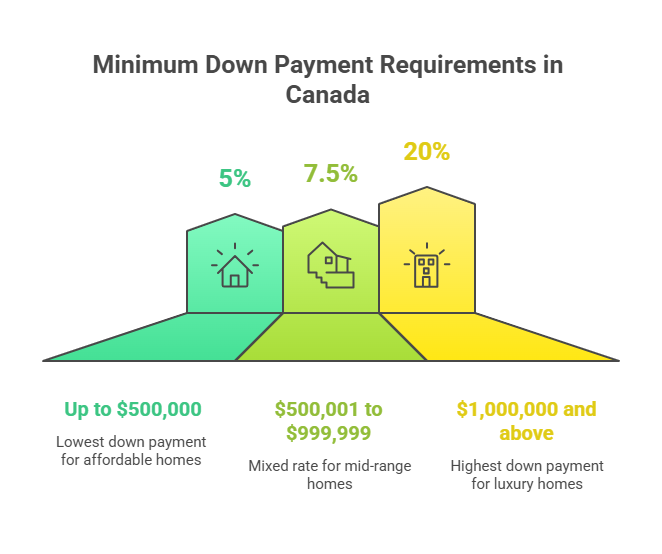
A chart showing minimum down payment requirements in Canada.

If your down payment is less than 20%, you’ll need mortgage loan insurance. This insurance helps protect the bank if you can’t make your payments. Some places have special insurance programs for newcomers with just a 5% down payment.

There’s also the Home Buyers’ Plan (HBP), which lets you pull out up to $35,000 from your RRSP (Registered Retirement Savings Plan) without paying taxes to buy or build your first home. However, you must make sure the money has been in the RRSP for at least 90 days before you take it out. After you get the money, you’ve got 15 years to pay it back.

Credit Score History Considerations for New Comers

Newcomers to Canada typically start with no credit score, as their credit history from their country of origin does not transfer to Canada.

This means they begin building their Canadian credit history from scratch. While a good credit score is essential for securing loans and mortgages, some programs are designed to accommodate newcomers with limited or no Canadian credit history.

For instance, the CMHC Newcomers Program requires a minimum credit score of 600 for at least one borrower or guarantor, and may consider alternative methods of establishing creditworthiness if a Canadian credit history is limited.

Additionally, banks like Scotiabank offer credit cards under the StartRight® Program without requiring a Canadian credit history. As newcomers build their credit, they can improve their scores by using credit responsibly and making timely payments.

Learn how buying a home affects your credit score in Canada here.

Government Programs for First Time Homebuyers

In Canada, there are government programs ready to lend a hand to first-time homebuyers.
Here are the two big ones: the First-Time Home Buyer Incentive and the Shared Equity Mortgage Providers Fund.

First-Time Home Buyer Incentive (FTHBI)

The First-Time Home Buyer Incentive is part of Canada’s National Housing Strategy, designed to help first time home buyers acquire their first home (Government of Canada).

This program aims to make homeownership more affordable by providing a government loan of either 5% or 10% of the purchase price, which goes towards the down payment.


Key Features:

  • The government chips in 5% or 10% of the home’s price for your down payment.
  • This amount helps shrink your monthly mortgage bill.
  • You must pay it back after 25 years or when you sell the home.

The program has been extended until March 31, 2025, to continue supporting first-time buyers. To check eligibility, click here

Shared Equity Mortgage Providers Fund

This fund supports shared equity mortgage providers, helping eligible Canadians achieve affordable home ownership. It encourages additional housing supply and attracts new providers of shared equity mortgages.

Key Features:

  • Offers cash to shared equity mortgage providers.
  • Pushes for creative homeownership ideas.
  • Helps build more affordable housing.

Learn more about this fund by clicking here.


By tapping into these government programs, immigrants and those moving to wallet-friendlier cities like Calgary, Alberta, can get the boost they need to make their homeownership dreams come true.

For more tips and resources, dive into our article on the Canada home buying process made simple for newcomers, in this link.

Where to Get Assistance You Can Trust as a New Comer

For a successful home buying process, you need to work with a knowledgeable Realtor. They can guide you through the process of helping you navigate Calgary’s neighborhoods,  know best financing options and ensure you understand the local market conditions. Get you perfect realtor match using our tips in this article. 

For newcomers to Calgary seeking reliable information on buying a home, reading from trustworthy sources such as this Jenga Homes blog. In our easy to read  and informative articles, newcomers can gain a deeper understanding of Calgary’s real estate landscape, learn how to save, Canadian credit scores, getting pre-approved for a mortgage, how your employment affects the home buying process, home inspections, common  homeownership hidden costs and so much more!

For situation specific questions, don’t hesitate to contact us on (403)-472-3909.

Before you go,  grab your Free copy of our Calgary Home Buying Glossary for new comers. This downloadable will help you understand the home buying language and save you from misunderstandings that can cost you money and time. It’s Free! Get it here now!


Categories
Checklists

Choosing a Neighbourhood in Calgary: A New Home Buyer’s Guide

Choosing the right neighbourhood in Calgary matters as much as choosing the right home. You can renovate a kitchen — you can’t change your street, your school zone, or your commute. This guide covers the seven factors that actually predict whether a neighbourhood will work for your life: safety, schools, commute, amenities, community maturity, property values, and future development. Use it before you sign anything.

You’ve found a home you love. The layout works, the price is right, the finishes are exactly what you wanted. But before you make an offer, there’s a question that matters just as much as any of those things: is this the right neighbourhood?

Location is the one thing you can never change about a home. Every other decision — the kitchen, the bathroom, the backyard — can be updated over time. The street it sits on, the school zone it falls in, the commute it creates — those are fixed the day you move in.

Calgary is a city with genuinely different neighbourhoods, each with its own character, infrastructure, and trajectory. Choosing well means understanding what to look for before you commit. This guide walks you through a practical, Calgary-specific process for evaluating any neighbourhood before you buy.

How Do You Evaluate a Neighbourhood Before Buying a Home?

To evaluate a neighbourhood before buying, assess seven factors in order: safety record, school zone and quality, daily commute time, proximity to amenities, community maturity, recent property value trends, and planned future development. Visit the neighbourhood at different times of day, talk to residents if you can, and verify school catchment zones with the specific street address — not just the general area.

The order matters. Safety and schools are fixed infrastructure that affect your daily life from day one. Commute and amenities affect your time and money every week. Property values and development plans affect your long-term financial security.

Here’s how to assess each one specifically for Calgary.

1. Safety: How to Check Crime Data for a Calgary

The Calgary Police Service publishes a publicly accessible crime statistics map at calgarypolice.ca where you can check reported incidents by community for the past year. Look at the trend over time, not just a single month. Established communities with stable, low crime rates are generally safer bets than areas with recent spikes, regardless of what a listing agent tells you.

A few things to check beyond the raw crime map:

  • Walk the streets yourself. Is there graffiti? Are properties maintained? Are there people out during the day? These are reliable informal indicators of neighbourhood health.
  • Check at different times. A quiet street at 2pm on a Tuesday can feel very different at 10pm on a Friday. Visit at least twice, at different hours.
  • Look for traffic safety. If you have children, check for traffic speed, pedestrian crossings, and whether kids can walk safely between home and school.


Communities in Calgary’s northwest and southwest quadrants consistently score well on safety. Established northeast communities like Monterey Park and Abbeydale have improved significantly in recent years and represent genuine value for buyers willing to look past reputation.

2. Schools: How to Verify School Zones in Calgary Before You Buy

In Calgary, school catchment zones are tied to your specific home address, not your general community. Two homes on opposite sides of the same street can be in different school zones. Always verify the exact catchment using the Calgary Board of Education’s school finder tool at cbe.ab.ca with the specific street address of the property — before you make an offer, not after.

This is one of the most common mistakes Calgary buyers make. They research the community, find out there’s a good school nearby, and assume they’re in that school’s catchment. They’re often not.

How to get it right:

  • Use the CBE School Finder with the full street address of the property
  • Check both the Calgary Board of Education (public) and Calgary Catholic School District options
  • If the community is new or growing, ask the school board directly whether a new school is planned and what the realistic timeline is


Even if you don’t have children, school zone quality matters. Homes in sought-after school catchments hold their value more reliably during market corrections and sell faster when you eventually list.

3. Commute: How to Test Your Real Drive Time Before Buying in Calgary

The only reliable way to evaluate a Calgary commute is to drive it yourself during peak hours — specifically between 7:30am and 8:30am on a weekday. Traffic patterns vary significantly by neighbourhood and corridor. A commute that shows as 20 minutes on Google Maps at 2pm can easily be 45 minutes at 8am on Deerfoot Trail or Stoney Trail during the school year.

Test the route, don’t calculate it. A few things to check:

  • Drive or transit the route to your workplace at the time you’d actually leave in the morning
  • Check whether the CTrain or bus network connects your potential neighbourhood to your employer — Calgary’s CTrain has two lines (Blue and Red) with good coverage in specific corridors
  • If you’re considering High River or another community south of Calgary, Highway 2 is typically 30 to 35 minutes to the city’s south boundary outside rush hour, with minimal congestion compared to Calgary’s inner corridors
  • Factor in two-car costs if the neighbourhood requires it — $12,000 to $18,000 per year per vehicle is a real budget line item
A family of 4 standing over their bicycles as they lift their water bottles in a sign of victory.

4. Amenities: What to Look For (and What Takes Years to Arrive)

When evaluating amenities, distinguish between what exists today and what is promised in a developer’s marketing materials. In established Calgary communities, the grocery store, the pharmacy, the parks, and the school are already there. In new outer developments, they may be 3 to 7 years away. Buying into a promise is a different decision than buying into a community.

For a practical amenity check, ask yourself:

  • Can I walk to a grocery store, or do I need a car for every errand?
  • Is there a park within 10 minutes on foot?
  • Is there a medical clinic, pharmacy, or urgent care centre nearby?
  • Are there cafés, restaurants, or community gathering spots within reach?

In Calgary’s newer outer communities, show homes are surrounded by mud and construction equipment for years after buyers move in. The amenity promises in the marketing brochure are real, but the timeline is often longer than advertised.

This is one of the core reasons Jenga Homes builds in established communities in Calgary and High River. The infrastructure is already there. Your kids can walk to school on move-in day, not three years later.

5. Community Maturity: The Difference Between Established and Brand-New

An established neighbourhood has mature trees, active community associations, neighbours who know each other, and years of social infrastructure already built. A brand-new community has none of these yet. Neither is objectively better, but they’re genuinely different experiences — and most first-time buyers underestimate how long it takes a new community to feel like a neighbourhood.

Signs of a mature, healthy community in Calgary:

  • Active community association (check the City of Calgary’s community association directory)
  • Tree canopy on residential streets (trees take decades to grow — they’re a reliable proxy for community age and care)
  • Mix of residents — young families, long-term owners, different life stages all visible
  • Local events, block parties, or community programming happening organically
  • Maintained public spaces and pride in the physical environment


In High River, the Monteith neighbourhood where Jenga Homes builds was specifically designed with
pond systems, walking trails, playgrounds, and community gardens built in from the start — a deliberate attempt to shortcut the community-maturity timeline that most new developments skip.

6. Property Values: How to Assess Whether a Calgary Neighbourhood Is a Good Investment

In Calgary, neighbourhoods with strong school reputations, established infrastructure, and low inventory tend to hold value better through market corrections than fringe developments or condo-heavy areas. As of April 2026, detached homes in established communities are in seller’s market territory at 2.3 months of supply, while apartment condos are in buyer’s market territory at 4.4 months — a significant difference in long-term value stability.

A few practical tools for assessing property value trajectory in any Calgary community:

  • CREB data: The Calgary Real Estate Board publishes monthly benchmark prices by community. Look at the 3-year trend, not just the current price.
  • Days on market: Homes in strong communities sell faster. A community with consistently low days-on-market is one where demand is reliable.
  • Benchmark price vs average price: The benchmark price (adjusted for property mix) is a more reliable indicator than average price, which can be distorted by a few large sales.


The northwest and southwest Calgary quadrants have historically shown the most stable appreciation.
REMAX’s 2026 Calgary outlook identified Springbank Hill, Discovery Ridge, and Rocky Ridge as top performers — all established communities on the west side.

7. Future Development: How to Research What's Coming to a Calgary Neighbourhood

Before buying in any Calgary neighbourhood, check the City of Calgary’s land use planning maps and development permit register for the area. Planned amenities (schools, transit, parks) can significantly improve a community’s value. Planned high-density development near a low-density residential street can affect character and traffic. Both are worth knowing before you commit.

Where to look:

  • City of Calgary development map: calgary.ca/planning and development — shows current and pending development applications
  • Area Structure Plans: available on the City’s website for any planned community — these outline what’s approved to be built and where
  • Google Maps satellite view: shows surrounding land uses and how much undeveloped land sits adjacent to the neighbourhood — a field today can become a big-box retail strip in five years
  • Talk to neighbours: current residents often know about pending developments that haven’t made it onto official maps yet


For buyers considering
High River, the Town of High River publishes its own land use maps and development plans. The Monteith and Montrose communities are planned with clear guidelines for residential density and green space that protect the character of the area.

The Neighbourhood Evaluation Checklist

Use this before making an offer on any Calgary home:

Safety

  • Checked Calgary Police crime map for this community
  • Visited the street during the day and evening
  • Assessed traffic safety for children


Schools

  • Verified catchment zone using CBE school finder with the exact address
  • Confirmed school is built (not just planned)
  • Checked CCSD for Catholic school zone if relevant


Commute

  • Drove the route to work at peak hours
  • Checked CTrain or bus options
  • Factored vehicle costs into total monthly budget


Amenities

  • Confirmed grocery store, pharmacy, and park exist now (not promised)
  • Assessed walkability realistically
  • Visited the community on a weekend to see activity level


Community maturity

  • Checked for an active community association
  • Assessed tree canopy and street condition
  • Observed resident mix


Property values

  • Reviewed 3-year CREB benchmark price trend for this community
  • Compared days-on-market to Calgary average
  • Understood what type of homes (detached, condo, townhouse) drive demand here


Future development

  • Checked City of Calgary development permit register
  • Reviewed area structure plan
  • Talked to at least one current resident


Learn why we chose to build in High River, Calgary 

Finding a New Home in a Neighbourhood That Already Works

If you’re looking for a new construction home in Calgary or High River, the neighbourhood evaluation process matters just as much as the home itself — maybe more.

At Jenga Homes, we build new homes in established communities where the infrastructure is already in place. Our fixed-price contracts mean your budget is protected from day one, and our dedicated team keeps you updated throughout the build with bi-weekly progress reports.

If you want to talk through which community makes sense for your life and your budget, book a free call with our team. No pressure, no jargon — just a straight conversation about what’s possible.

Frequently Asked Questions

Q. How do I evaluate a neighbourhood before buying a home in Calgary?
A. Assess seven factors in order: safety (using the Calgary Police crime map), school zones (verified with the CBE school finder using the exact address), commute time (tested by driving at peak hours), proximity to existing amenities, community maturity, recent property value trends using CREB data, and planned future development using the City of Calgary’s development permit register. Visit the neighbourhood at different times of day and talk to current residents where possible.


Q. How do I check which school zone a Calgary home is in?
A. Use the Calgary Board of Education’s school finder tool at cbe.ab.ca with the full street address of the property. School catchment zones in Calgary are tied to specific addresses, not general communities. Two homes on opposite sides of the same street can fall in different school zones. Always verify with the exact address before making an offer, and check both CBE and Calgary Catholic School District options.


Q. What makes a Calgary neighbourhood a good long-term investment?
A. As of 2026, Calgary neighbourhoods with strong school reputations, established community infrastructure, and low inventory of detached homes hold value most reliably. The northwest and southwest quadrants have historically shown the most stable appreciation. Avoid making a decision based on peak-market pricing alone — look at 3-year CREB benchmark trends and days-on-market for the specific community type you’re buying into.


Q. How do I find out about future development near a Calgary home I’m considering?
A. Check the City of Calgary’s development permit register and land use planning maps at calgary.ca. Also review the Area Structure Plan for the community, which outlines what is approved to be built and where. Google Maps satellite view shows surrounding undeveloped land that could change in character. Talking to current residents is often the fastest way to learn about pending changes that haven’t yet appeared in official records.


Q. Does Jenga Homes help buyers choose the right community?
A. Yes. At Jenga Homes, we build in established communities in Calgary and High River where schools, parks, and daily amenities are already in place. Our team can walk you through what to look for and which of our current projects fits your life and budget. All builds come with fixed-price contracts and bi-weekly progress updates. Book a free call at jengahomes.ca/contact to start the conversation.


Categories
First-Time Buyers

The Perks of Choosing a Newly Constructed Home in Calgary

So, you’re ready to start house hunting in the Calgary housing market? That’s great! One of the first decisions you’ll face is whether to go for a pre-owned resale home or a sparkling newly constructed home. Both have their own charm, but if you’re after a modern, hassle-free, and personalized living experience, new construction might just steal your heart. Here’s are the awesome advantages that come with buying a newly built home in Calgary:

Your Vision, Your Home: The Joy of Customization

Imagine walking into a home that is truly yours, a space that reflects your unique style and personality1. With new construction, you have the power to create a home that is tailored to your specific needs and preferences.

One of our clients were Sarah and her husband. After years of renting, they finally found a home they could truly call their own thanks to Jenga Homes’ affordable new constructed homes.
Now, they can finally enjoy preparing meals and relaxing in spaces that are a true reflection of themselves.


Peace of Mind From Day One: Everything is Brand New!

Let’s be honest, dealing with unexpected repairs in an older home can be a real pain. With a new construction home, you can wave goodbye to those worries. Everything is fresh, from the roof to the plumbing, giving you peace of mind and reducing the chances of those dreaded maintenance calls. You can simply unwind and enjoy your new space without the stress of constant upkeep.

Just like Sarah and her husband, who were tired of renting and dealing with repairs in older homes, you can experience the joy of moving into a brand-new space where everything is in pristine condition. 

Energy Savings That Make a Difference

In a world that’s becoming more and more eco-conscious, saving energy is important. New construction homes are built with the newest technologies and materials that are designed to use less energy. Think about better insulation, windows that are good at keeping heat in or out, and appliances that are top-of-the-line when it comes to saving energy.

This not only means you’ll pay less for your utilities each month, but it also helps protect the planet by lowering your impact on it.

Remember Sarah and her husband? They were thrilled to discover how much they were saving on their energy bills after moving into their new Jenga home. Their old rental was drafty and inefficient, but their new home felt comfortable year-round without them having to crank up the heat or air conditioning.


Learn more about smart home automation here.

Modern Living: Embrace Contemporary Design

New construction homes often have open floor plans, big kitchens that are perfect for hanging out with family and friends, and fancy bathrooms that feel like your own private spa. You won’t find any of those small, old-fashioned layouts here! Instead, you’ll get to enjoy a sense of openness and connection, making your home the perfect place for both entertaining and everyday life.

For Sarah and her husband?, they always dreamed of having a modern, open kitchen where they could cook together and entertain guests. Their Jenga Home made that dream a reality. Now, they love spending time in their spacious kitchen, which seamlessly flows into the dining and living areas, creating a welcoming and stylish space for gatherings of all sizes.


Warranties: Your Safety Net for Peace of Mind

One of the best things about buying a newly built home is the protection you get with builder warranties. These warranties usually cover the most important parts of your home— like the roof, foundation, and appliances—for a certain amount of time.

If anything goes wrong, you’re protected, which means you won’t have to suddenly pay a lot of money for repairs. It’s like a safety net that lets you enjoy your new home without worrying.

Jenga Homes is backed by a team of experienced architects, engineers, and contractors. This means our expertise in making sure your new home is carefully planned and built to the highest standards. At Jenga Homes, we also believe in open communication and being completely transparent throughout the process of buying a home. This means you can make informed decisions and feel confident every step of the way of your home construction journey.

Community Living: Connect and Thrive

Many new construction homes are located in planned communities that offer a wealth of amenities and a strong sense of belonging. Imagine having parks, playgrounds, walking trails, and even community centers right at your doorstep! It’s a great way to meet your neighbors, get involved in local activities, and create lasting friendships.

Jenga Homes’ current project in High River, Alberta, offers exactly this kind of community experience. High River is described as a “picturesque town nestled in the foothills of the Rockies” that “offers the perfect blend of small-town charm and modern conveniences.” This makes it a great place to put down roots and enjoy a connected lifestyle.

Low-Maintenance Living: Time for What You Love

One of the biggest perks of choosing a new construction home is the low-maintenance lifestyle it offers. You can finally say goodbye to weekends spent on endless repairs and chores, and hello to more free time to pursue your passions and spend quality time with loved ones.

Think back to Sarah and her husband. In their old rental, they were constantly battling leaky faucets, creaky floors, and outdated appliances. It felt like every weekend was consumed by some sort of repair or maintenance task. Now, they spend their weekends hiking in the foothills of the Rockies near High River, exploring local farmers’ markets, or simply curling up with a good book in their beautifully designed Jenga home.
Home is finally a place to relax and enjoy during their weekends. 

New construction homes  by Jenga Homes are built with durability and efficiency in mind. Our choice to use high-quality materials and modern construction techniques minimize the need for frequent repairs and upkeep. This means less time spent on tedious chores and more time to focus on the things you love.


Enjoy Higher Resale Value: A Smart Investment

Purchasing a new construction home can be a wise investment, especially in a growing real estate market like Calgary.

In the article “The 2024 Calgary Real Estate Market Forecast For Home Owners and Investors” it discusses the positive trends in the Calgary real estate market that support the idea that new construction homes are likely to hold their value well and potentially appreciate over time.

The article also highlights that Calgary’s real estate market is experiencing steady growth, with experts predicting continued appreciation in the coming years. This positive market outlook, combined with the modern features, energy efficiency, and low-maintenance aspects of new construction homes, suggests that these properties are well-positioned for strong resale value in the future.

Think of it this way: Sarah and her husband, are not only enjoying a beautiful and functional home, but should they decide to sell their Jenga Home in the future, they could potentially reap the rewards of a strong real estate market and a desirable, well-maintained property.


Read the 2024 CREB report here.

In Conclusion...

Building a new home is an exciting adventure that allows you to create a space that truly reflects your vision and lifestyle. From the ability to personalize your space, and the peace of mind that comes with a brand-new home, there are many compelling reasons to consider a newly constructed home. Energy efficiency, modern living spaces, and thriving communities are just a few of the advantages that await you.

What next? Download our FREE Home Buyers Glossary. This valuable resource will empower you with explanations of hard real estate terms, to make informed decisions throughout the process.

If you’re ready to see our newly built homes, contact us today on (403)- 454-2218.

Categories
Communities

7 Must-Visit Community Parks and Green Spaces in High River, Calgary

High River, nestled in the scenic foothills of the Rocky Mountains, is a perfect destination for those who love the outdoors. This charming town is surrounded with natural beauty, offering a variety of recreational activities and green spaces.

From peaceful retreats to bustling family-friendly areas, these parks serve as a welcome escape from daily life, giving visitors the chance to reconnect with both nature and the local community.

In this guide, we’ll take you through seven of the top community parks and green spaces in High River. If you want to plan a family outing, catchg up with friends, or seek some alone time in nature, these parks are sure to impress any outdoor enthusiast.

George Lane Memorial Park

Set alongside the serene Highwood River, the George Lane Memorial Park offers a peaceful escape into nature. As one of High River’s favorite spots, the park features scenic walking trails that meander through vibrant greenery, offering visitors stunning river views along the way. Whether you’re taking a quiet stroll or just soaking up the peaceful surroundings, this park is a true retreat from the daily grind.

With plenty of picnic spots, it’s also the perfect place for a relaxed family gathering, a laid-back afternoon with friends, or simply enjoying a moment to yourself amidst nature. The beauty and calm of George Lane Memorial Park make it a must-see for anyone looking to unwind and enjoy the outdoors in High River.

Sunshine Lake Playground

Set against the scenic backdrop of Sunshine Lake, this playground is ideal for a day of outdoor fun. Kids can enjoy a wide range of equipment, from swings and slides to climbing structures, all while parents relax in the surrounding greenery. The park’s shady spots provide the perfect place to sit back and unwind while keeping an eye on the little ones.

Whether you’re looking for a place where the kids can release some energy or a lovely relaxed family outing, Sunshine Lake Playground is a must-visit spot in High River for an afternoon full of fun and fresh air.

A path in a community park that has 3 women and a dog walking on it.

Lions Campground

This is a fantastic all-in-one destination, offering both camping opportunities and a peaceful green space for visitors to enjoy outdoor activities. Known for its well-kept facilities and close proximity to nature, it’s an ideal spot for anyone looking to escape for a weekend of relaxation or adventure.

If you’re looking for a quiet retreat in the outdoors, a fun-filled family camping trip, or simply want to explore the surrounding nature, Lion’s Campground has you covered. With its prime location and plenty of amenities, it strikes a perfect balance between convenience and the thrill of outdoor adventure, making it a go-to spot for campers and day-trippers alike.

High River Spray Park

This is the perfect spot for families with young children looking to make the most of the sunny summer and fall days. It is a lively water play area that offers a safe, fun-filled environment where kids can splash around and cool off during the warmer months.

Designed for children between 18 months and 12 years old, the park features a range of water attractions, including sprays, fountains, and interactive elements that keep little ones entertained for hours. With its bright, colorful layout and engaging activities, High River Spray Park is a go-to destination for families seeking affordable outdoor fun.

If you’re searching for a way to escape the heat or just want to spend quality time with your kids, this spray park offers a refreshing and playful experience that’s sure to make your visit memorable.

Birchwood Natural Playground

This park offers a truly one-of-a-kind play experience, earning its place as one of Southern Alberta’s top playgrounds. It has a thoughtfully designed space encourages children to explore, imagine, and interact with nature in a way that traditional playgrounds often don’t.

Tailored for kids aged 5 to 12, the playground features natural elements like logs, rocks, and sand, creating a hands-on environment where children can use their creativity and problem-solving skills to craft their own adventures. With its emphasis on open-ended play, Birchwood Natural Playground inspires imaginative thinking and fosters a deep connection with nature.

Whether you’re looking for a place where your kids can let their imaginations run free or simply want to enjoy the serene beauty of High River, this playground is a must-visit destination for families who appreciate the wonders of nature.

a man laying on the grass with 2 dogs. In the distance is a dog park surrounded with a low fence.

Bishop Off-Leash Dog Park

We couldn’t forget our beloved furry friends in this list.

Bishop Off-Leash Dog Park is a favorite spot for dog owners in High River, providing a spacious area where dogs can run, play, and socialize with other pups. With a solid 4.2-star rating, the park is well-loved for its pet-friendly amenities and welcoming atmosphere.

Whether your dog needs to burn off some energy, make new friends, or you simply want to enjoy a relaxed stroll in the fresh air, Bishop Off-Leash Dog Park offers a fun and friendly environment for both pets and their owners. It’s the perfect place to let your furry friend roam free while you connect with fellow dog lovers.

Little Bow Dog Park

This is another haven for canine companions and their owners in High River. It’s an off-leash park where dogs can roam freely, play, and socialize with other furry friends. The park’s natural surroundings, lush greenery, and ample open space create a stimulating and enjoyable environment for both pets and their owners.

Imagine your dog bounding through the park, chasing squirrels, and playing with other dogs. Little Bow Dog Park offers a perfect space for your furry friend to exercise, explore, and unleash their natural instincts. The park’s design encourages imaginative play and allows dogs to connect with their natural environment.

In Conclusion...

Whether you’re seeking outdoor adventures, quality time with family, or simply a peaceful place to relax, High River’s parks and green spaces offer something for everyone.

From serene walking paths along the Highwood River to vibrant playgrounds and off-leash dog parks, these green spaces provide a perfect escape from the hustle and bustle of everyday life.

So, why not explore these beautiful natural areas and discover the joy of living in High River. If you’re looking for a place to call home in High River, contact us today to know about the available homes for sale in High River – a vibrant, scenic and welcoming town.

Categories
First-Time Buyers Uncategorized

Buying A Home in Alberta Made Simple

So, you’re thinking of buying a home in Alberta? That’s a fantastic decision! Alberta offers a unique blend of urban amenities and natural beauty, making it a desirable place to live. But before you dive headfirst into the home-buying process, let’s take a moment to understand what’s involved.

Did you know that Alberta has one of the highest homeownership rates in Canada? This is partly due to its strong economy and affordable housing options.


However, the buying process can be complex, especially for first-time homebuyers. That’s why we’ve created this step by step guide to help you navigate the journey with confidence.

Let’s dig in!

Step-by-Step Guide to Purchasing a Home

Get Pre-Approved for a Mortgage: A Crucial Step

Buying a home in Alberta without a pre-approval is like going shopping without knowing your budget. It can lead to disappointment and frustration. A pre-approval gives you a clear picture of how much you can afford to spend on a home.

Here’s what you need to do:

  1. Determine your budget:
    Figure out how much you can comfortably afford for a down payment, monthly mortgage payments, property taxes, and home insurance.

  2. Gather necessary documents:
    Lenders will require proof of income, credit history, and employment.

  3. Shop around for the best rates:
    Don’t settle for the first mortgage offer you get. Compare rates and terms from different lenders to find the best deal.

By getting pre-approved, you’ll have a stronger negotiating position when making offers on homes. It also shows sellers that you’re a serious buyer.

Learn all about getting Pre-Approved in this article, ‘What is Mortgage Pre-Approval?

Start House Hunting

Once you’re pre-approved, it’s time to start house hunting in Alberta. This can be an exciting but overwhelming process. To make it more manageable:

  1. Define your must-haves and nice-to-haves:
    Make a list of features that are essential to you, such as the number of bedrooms, bathrooms, and square footage. Also, consider factors like proximity to schools, parks, and public transportation.

  2. Explore different (Calgary )neighborhoods:
    Research different areas to find one that suits your lifestyle and preferences. Consider factors like crime rates, property values, and amenities.

  3. Attend open houses and schedule viewings:
    Visit homes that meet your criteria and ask questions about the property, neighborhood, and seller. Don’t be afraid to negotiate on the price.

Remember to be patient and persistent. Finding the perfect home takes time, but it’s worth the effort.


Learn about the Common Mistakes to Avoid when House Hunting here

Make an Offer

Once you’ve found a home you love, it’s time to buy a home in Alberta by making an offer. Here’s what you need to know:

  1. Work with your agent to determine a fair price:
    Your real estate agent can help you assess the home’s value based on recent sales in the area.

  2. Include any conditions:
    Protect yourself by making your offer contingent on factors like a satisfactory home inspection or obtaining financing.

  3. Be prepared for negotiations:
    The seller may counter your offer, so be ready to negotiate until you reach an agreement.

Remember, the goal is to secure a fair price for the home while protecting your interests.

See our current housing project here

Get a Home Inspection

Before you finalize the purchase, it’s essential to buy a home in Alberta that is in good condition. A home inspection can reveal potential problems that may not be visible to the naked eye.

Here’s what you need to do:

  1. Choose a licensed inspector familiar with Calgary homes:
    Look for an inspector with experience in the area to ensure a thorough evaluation.

  2. Attend the inspection if possible:
    Being present can help you understand the inspector’s findings and ask any questions.

  3. Review the report carefully:
    The inspector will provide a detailed report outlining any issues or concerns.

A home inspection can give you peace of mind and help you negotiate a fair price for the property.

Thinking of doing the home inspection yourself? Learn how with our Free Inspection Checklist here.

Finalize Your Mortgage

Once you’ve accepted the seller’s offer and completed a home inspection, it’s time to buy a home in Alberta by finalizing your mortgage. Here’s what you need to do:

  1. Provide any additional documents required by the lender:
    The lender may request additional paperwork to verify your financial information.

  2. Lock in your interest rate:
    To protect yourself from rising interest rates, consider locking in your rate.

  3. Review the terms and conditions carefully:
    Make sure you understand the terms of your mortgage, including the interest rate, repayment schedule, and any prepayment penalties.

By finalizing your mortgage, you’re taking a significant step towards homeownership.

Learn how to use Mortgage Calculators before confirming a Mortgage.

Close the Deal

The final step in buying a home in Alberta is closing the deal. Here’s what you need to do:

  1. Work with a real estate lawyer:
    Your lawyer will review all the necessary documents and ensure your rights are protected.

  2. Review and sign all necessary documents:
    This includes the mortgage agreement, deed, and other legal documents.

  3. Pay closing costs and down payment:
    Be prepared to pay closing costs, which can include fees for the lawyer, lender, and title insurance. You’ll also need to pay your down payment.

Once the closing is complete, you’ll officially be a homeowner in Alberta!

Remember: The home buying process in Calgary can take several months from start to finish. Patience is key! With careful planning and preparation, you’ll be able to find the perfect home and achieve your dream of homeownership.


Legal Considerations and Paperwork

When buying a home in Alberta, you’ll encounter various legal documents that outline the terms and conditions of the sale. Here’s a breakdown of some of the most important ones:

Purchase Agreement

  1. Outlines terms and conditions of the sale: This document specifies the purchase price, closing date, and any conditions or contingencies agreed upon by the buyer and seller.

  2. Includes purchase price, closing date, and any conditions: It also details the property’s address, legal description, and any personal property included in the sale.

Property Disclosure Statement

This is a document provided by the seller that declares any known issues with the property. It’s important to review this statement carefully to identify any potential problems that may need to be addressed.

  1. Land Title: 
    When buying a home in Alberta, the land title is a legal document you need. It confirms ownership of the property and any encumbrances (such as mortgages or liens) that may be attached to it.


  2. Mortgage Documents:
    This includes the mortgage agreement and related paperwork. The mortgage agreement outlines the terms and conditions of your loan, including the interest rate, repayment schedule, and any prepayment penalties.
  3. Home Insurance Policy:
    When buying a home in Alberta, most lenders require you to have home insurance before closing on the property. This policy will protect your home and its contents from damage caused by fire, theft, or other covered events.


Unique Aspects of the Home Buying Process in Calgary

Calgary’s real estate market has some unique aspects:

  • CREB (Calgary Real Estate Board) Forms: Standardized forms used in local transactions
  • Property Assessment: Annual evaluation by the City of Calgary for tax purposes
  • Flood Plain Considerations: Important due to Calgary’s location near rivers

Working with Professionals

Throughout the process, you’ll interact with various professionals:

  • Real Estate Agent
  • Mortgage Broker or Bank Representative
  • Home Inspector
  • Real Estate Lawyer
  • Insurance Agent

Each plays a crucial role in ensuring a smooth transaction.

Understanding Closing Costs

Be prepared for additional expenses when closing your home purchase:

  • Legal fees
  • Land transfer tax
  • Property tax adjustments
  • Mortgage insurance (if applicable)
  • Home insurance
  • Moving expenses

Typically, budget 1.5% to 4% of the home’s purchase price for closing costs in Calgary.


Post-Purchase Considerations

After buying your home:

  1. Change the locks
  2. Set up utilities in your name
  3. Update your address with relevant institutions
  4. Familiarize yourself with home maintenance tasks
  5. Meet your neighbors and get to know your new community

Key Takeaways

  • The home buying process involves multiple steps, from mortgage pre-approval to closing
  • Understand the legal documents involved in purchasing a home in Alberta
  • Be aware of Calgary-specific considerations in the real estate process
  • Work with trusted professionals to navigate each stage
  • Budget for closing costs and post-purchase expenses
  • Prepare for your new life as a homeowner in Calgary

By understanding the home buying process in Alberta and Calgary specifically, you’ll be well-prepared to navigate each step with confidence. In the next section, we’ll discuss creating a realistic timeline for your home buying journey.

Conclusion

You’ve now gained a solid understanding of the home buying process in Alberta. By following the steps outlined in this guide, you’ll be well-prepared to navigate the journey and find your dream home.

To further assist you, we’ve created a free Home Buyers Glossary that defines key terms and concepts related to the home buying process. Download it here today to have all the information you need at your fingertips.

Ready to start your home-buying adventure? Contact us on (403)- 454-2218 to get started.

Happy house hunting!

Categories
First-Time Buyers

How to Prepare Financially for Homeownership in Calgary: A Comprehensive Guide

Are you dreaming of owning a home in Calgary? The journey to homeownership is exciting, but it requires careful financial planning and preparation. In this guide, we’ll explore the essential steps to help you prepare financially for homeownership in Calgary’s dynamic real estate market.

What This Guide Covers

In the following sections, we’ll delve into:

  • Strategies for saving and budgeting
  • Understanding Calgary’s unique real estate market
  • Navigating mortgage options and pre-approval processes
  • Exploring first-time homebuyer programs in Calgary
  • Assessing additional costs of homeownership
  • Working with real estate professionals

So whether you’re eyeing a downtown Calgary condo or a suburban family home, this guide will provide you with the knowledge and key tips you need to make informed decisions on your path to homeownership.

Let’s begin your journey to becoming a well-prepared homeowner in Calgary!

Understanding Calgary's Housing Market

Calgary’s real estate landscape is as diverse as the city itself. From bustling downtown condos to spacious suburban homes, the market offers options for every type of homebuyer. Let’s dive into the current state of Calgary’s housing market to help you make informed decisions.


Current Market Trends

The Calgary housing market has shown resilience and growth in recent years. Here are some key trends to keep in mind:

  1. Steady appreciation: Property values in many Calgary neighborhoods have been on an upward trajectory.
  2. Increased demand: Low interest rates and changing work patterns have fueled interest in homeownership.
  3. Inventory fluctuations: The balance between supply and demand varies by neighborhood and property type.


Calgary Housing Market Insights 2024

  • Calgary housing market trends show a significant increase in home prices driven by limited supply, with the benchmark home price rising 8.5% year-over-year to $608,000, while the number of home sales has decreased by 13% compared to last year. 
  • The average home price in Calgary has also increased by 13% to $623,245, reflecting a strong demand despite rising mortgage rates and declining affordability in the market.


Factors Influencing Calgary’s Real Estate Market

Several key factors contribute to the dynamics of Calgary’s housing market:

  1. Economic conditions: The health of Alberta’s oil and gas industry often impacts the real estate market.
  2. Population growth: Calgary continues to attract newcomers, driving housing demand.
  3. Interest rates: Changes in mortgage rates can significantly affect affordability and market activity.
  4. Government policies: Federal and provincial housing initiatives can influence buying patterns.

Best Time to Buy a House in Calgary

While personal circumstances should guide your decision, certain seasons can offer advantages:

  • Spring: Largest inventory, but also more competition
  • Fall: Potential for good deals as sellers aim to close before winter
  • Winter: Less competition, motivated sellers

Remember: The “best” time to buy is when you’re financially prepared and find a home that meets your needs.


Key Tips:

  • Calgary’s real estate market is diverse, with options for various budgets and preferences.
  • Current trends suggest a stable market with potential for growth.
  • Understanding neighborhood-specific data is crucial for making informed decisions.
  • Timing your purchase should balance market conditions with your personal readiness.

By understanding these aspects of Calgary’s housing market, you’ll be better equipped to navigate your homebuying journey. 

II. Assessing Your Financial Readiness

Before diving into the Calgary real estate market, it’s crucial to evaluate your financial situation. This assessment will help you understand how much house you can afford and identify areas for improvement in your financial profile.

Why Financial Preparation is Crucial
Preparing financially for homeownership goes beyond saving for a down payment. It involves a comprehensive approach to your finances, including:

  1. Assessing your current financial health
  2. Understanding mortgage options and requirements
  3. Budgeting for additional homeownership costs
  4. Planning for long-term financial stability

By taking these steps, you’ll be better positioned to navigate the home buying process in Alberta and find a property that fits both your lifestyle and budget.


Start by Evaluating Your Credit Score

Your credit score plays a significant role in your mortgage application process. Here’s what you need to know:

Credit Score do you need to buy a house in Calgary:

  • Minimum score for traditional mortgage: Usually 620+
  • For the best rates: 700+
  • For CMHC-insured mortgages: 680+ is ideal

Tip: Check your credit score for free through services offered by many Canadian banks or credit bureaus.

1. Calculate Your Debt-to-Income Ratio for Mortgages

Lenders use your debt-to-income ratio (DTI) to assess your ability to manage monthly payments. Here’s how to calculate it:

  1. Sum up all your monthly debt payments
  2. Divide this total by your gross monthly income
  3. Multiply by 100 to get the percentage

Target DTI Ratios:

  • 35% or less: Excellent
  • 36% to 42%: Good
  • 43% to 49%: Acceptable, but may limit your options
  • 50% or higher: May need to improve before applying


Determining How Much House You Can Afford

Several factors influence your home buying power:

  • Annual income
  • Down payment amount
  • Monthly debts
  • Credit score
  • Current interest rates


Tools to Help You Calculate:

  1. CMHC Mortgage Calculator: Offers a comprehensive affordability estimate
  2. Bank Mortgage Calculators: Most major Canadian banks offer these tools
  3. Affordability Spreadsheets: Create your own for a personalized approach

Remember: Just because you can afford a certain amount on paper doesn’t mean you should stretch your budget to the limit.


2. Assess Your Savings

Consider these key financial aspects:

  1. Down Payment: Minimum 5% for homes under $500,000, with a sliding scale for pricier properties
  2. Closing Costs: Budget 1.5% to 4% of the home’s purchase price
  3. Emergency Fund: Aim for 3-6 months of living expenses
  4. Moving and Initial Home Costs: Don’t forget about immediate expenses after purchase


3. Improve Your Financial Profile

If your assessment reveals areas for improvement, consider these steps:

  1. Pay down existing debts to lower your DTI
  2. Boost your credit score by making payments on time and reducing credit utilization
  3. Increase your savings rate for a larger down payment
  4. Consider additional income sources to improve your overall financial picture

Key Tips:

  • Understanding your credit score and debt-to-income ratio is crucial
  • Use online tools like the CMHC mortgage calculator to estimate affordability
  • Consider all costs associated with homeownership, not just the mortgage
  • Be prepared to make improvements to your financial profile if necessary

By thoroughly assessing your financial readiness, you’ll be better prepared to enter the Calgary housing market with confidence. 

III. Saving for a Down Payment

One of the biggest hurdles for potential homeowners in Calgary is accumulating enough savings for a down payment. Let’s explore the requirements and strategies to help you reach this crucial milestone.
 

Minimum Down Payment Requirements in Calgary

The amount you’ll need to save depends on the purchase price of your desired home:

  • For homes $500,000 or less: Minimum 5% of the purchase price
  • For homes $500,000 to $999,999:
    • 5% of the first $500,000
    • 10% of the remaining amount
  • For homes $1 million or more: Minimum 20% of the purchase price

Note: While these are the minimums, a larger down payment can significantly reduce your mortgage costs.


Benefits of a Larger Down Payment

Saving more than the minimum can offer several advantages:

  1. Lower monthly mortgage payments
  2. Reduced mortgage insurance premiums (or elimination if 20%+ down payment)
  3. More equity in your home from the start
  4. Potentially better mortgage rates


Down Payment Savings Strategies

Wondering how to save for a house in Calgary? Try these effective methods:

  1. Automate your savings: Set up automatic transfers to a dedicated savings account
  2. Cut unnecessary expenses: Review your budget and redirect funds to savings
  3. Explore additional income sources: Consider part-time work or freelancing
  4. Use tax-free savings accounts: Take advantage of TFSAs for your down payment fund
  5. Look into the Home Buyers’ Plan (HBP): This allows you to withdraw from your RRSP for a down payment


How Long does it Take to Save for a House in Calgary?

The timeline varies based on your income, expenses, and savings rate. Here’s a rough estimate using current data:

  • Average home price in Calgary: $550,000 (as of 2024)
  • 5% down payment: $27,500
  • Saving $1,000 per month: Approximately 28 months (2 years and 4 months)

Here’s the breakdown:

  • $27,500 (down payment) ÷ $1,000 (monthly savings) = 27.5 months

Remember, this is just an example.
Your personal timeline may differ based on your specific circumstances and goals. Factors such as changes in the housing market, your ability to save more than $1,000 per month, or choosing a home above or below the average price will all impact your saving timeline.

Government Programs to Boost Your Down Payment Savings

Several programs can help first-time homebuyers in Calgary:

  1. First-Time Home Buyer Incentive: A shared equity mortgage with the Government of Canada
  2. Alberta Home Ownership Tools: Provincial programs to assist with homeownership
  3. Calgary-specific initiatives: Check with the City of Calgary for any local programs

Tips for Accelerating Your Savings

  1. Create a visual savings tracker to stay motivated
  2. Consider temporarily moving to a less expensive rental to increase savings
  3. Sell items you no longer need and add the proceeds to your down payment fund
  4. Ask family members about gifting options for down payment assistance

Key Tips

  • Understand the minimum down payment requirements based on home price
  • Consider the benefits of saving more than the minimum
  • Explore various savings strategies and government programs
  • Set realistic timelines based on your personal financial situation

By focusing on your down payment savings, you’re taking a crucial step towards homeownership in Calgary. 

IV. Understanding Mortgage Options in Calgary

Navigating the world of mortgages can be complex, but understanding your options is crucial when preparing to buy a home in Calgary. Let’s explore the various mortgage types and processes available to you.

Types of Mortgages Available

Calgary homebuyers have several mortgage options to consider:

  1. Fixed-rate mortgages: Interest rate remains constant for the term
  2. Variable-rate mortgages: Interest rate fluctuates with the market
  3. Open mortgages: Allow for prepayment without penalties
  4. Closed mortgages: Offer lower rates but have prepayment restrictions
  5. Conventional mortgages: Require a down payment of 20% or more
  6. High-ratio mortgages: For down payments less than 20%, requiring mortgage insurance

Pro tip: Consider your risk tolerance and financial goals when choosing between fixed and variable rates.


Getting Pre-Approved for a Mortgage

Mortgage pre-approval is a crucial step in your home buying journey. Here’s why it’s important:

  • Determines how much you can borrow
  • Locks in an interest rate (usually for 60-120 days)
  • Demonstrates to sellers that you’re a serious buyer


Steps to Get a Mortgage Pre-Approval in Calgary

  1. Gather necessary documents (proof of income, assets, and debts)
  2. Choose a lender or mortgage broker
  3. Complete the pre-approval application
  4. Provide additional information if requested
  5. Receive your pre-approval letter
    Learn more about getting a mortgage pre-approval here


Calgary-Specific Mortgage Programs and Incentives

Several programs are available to help Calgary homebuyers:

  • Attainable Homes Calgary: Offers down payment assistance for eligible buyers
  • CMHC First-Time Home Buyer Incentive: Provides 5-10% of the home’s purchase price to put toward a down payment
  • Alberta Affordable Home Ownership Program: Offers assistance through partnerships with municipalities and builders

Understanding the Canadian Mortgage Stress Test

All homebuyers in Calgary must pass the mortgage stress test. The Canadian Mortgage Stress Test is a regulatory requirement designed to ensure that borrowers can afford their mortgage payments even if interest rates rise in the future.
Here’s what you need to know:

  • Applies to all mortgages, including those with a 20%+ down payment
  • Tests if you can afford payments at a qualifying rate higher than your actual rate
  • Qualifying rate is the higher of 5.25% or your contract rate plus 2%

Working with Mortgage Professionals

Consider these options when seeking mortgage advice:

  1. Bank mortgage specialists: Work directly with a specific bank
  2. Mortgage brokers: Access rates and products from multiple lenders
  3. Credit unions: Often offer competitive rates and more flexible terms


Key Factors Affecting Your Mortgage Application

  1. Credit score
  2. Down payment amount
  3. Income and employment stability
  4. Existing debts and financial obligations
  5. The property’s value and condition


Tips for a Successful Mortgage Application

  1. Maintain a stable employment history
  2. Save for a larger down payment if possible
  3. Pay down existing debts
  4. Avoid taking on new credit before applying
  5. Be honest and thorough in your application

Key Takeaways

  • Understand the different types of mortgages available in Calgary
  • Get pre-approved to know your budget and show sellers you’re serious
  • Familiarize yourself with local and national mortgage assistance programs
  • Prepare for the mortgage stress test
  • Consider working with a mortgage professional for personalized advice

Understanding your mortgage options is a crucial step in your journey to homeownership in Calgary. 

V. Additional Costs of Homeownership in Calgary

While your mortgage will likely be your largest expense, it’s crucial to budget for other costs associated with buying and owning a home in Calgary. Understanding these expenses will help you prepare financially for long-term homeownership.


Property Taxes and Calgary Property Assessment
Property taxes are an ongoing expense for homeowners in Calgary:

  • Based on the assessed value of your property
  • Reassessed annually by the City of Calgary
  • Can be paid monthly or annually

Calgary Property Tax Rates:

  • Residential tax rate:  0.0064861% of assessed value
  • Non-residential tax rate: 0.0219922% of assessed value

Tip: Use the City of Calgary’s property tax calculator to estimate your potential property tax expenses.

Home Insurance Requirements Alberta

Home insurance is essential for protecting your investment:

  • Not legally required, but typically mandatory for mortgage approval
  • Covers the structure, contents, and liability
  • Costs vary based on factors like home value, location, and coverage level

Average annual home insurance costs in Calgary is $1,923 which translates to $160.25 per month.


Maintenance and Repairs

Budget for ongoing maintenance to keep your home in good condition:

  • Annual maintenance costs: Typically 1-3% of home’s value
  • Create a separate savings account for major repairs and replacements
  • Consider home warranties for added protection

Common maintenance expenses in Calgary:

  • HVAC system servicing
  • Roof inspections and repairs
  • Exterior painting
  • Landscaping and snow removal

Average Utility Costs for Homeowners in Calgary

Utility expenses can vary based on home size, efficiency, and usage.
Energy-saving tip: Consider upgrading to energy-efficient appliances and improving insulation to reduce utility costs.

Closing Costs Calgary

When budgeting for your home purchase, include these closing costs:

  • Legal fees
  • Land transfer tax
  • Home inspection
  • Title insurance
  • Mortgage default insurance (if applicable): 2.8% to 4% of mortgage amount

    Total closing costs typically range from 1.5% to 4% of the home’s purchase price.

Condo Fees (If Applicable)

If you’re buying a condo, factor in monthly condo fees:

  • Cover shared expenses like maintenance, insurance, and amenities
  • Vary widely based on the building and its features
  • Condo fees in Calgary:
    The average condo fees in Calgary typically cost around $0.50 per square foot. For instance, a 750-square-foot condo would result in monthly fees of approximately $375. However, these fees can vary significantly depending on the specific building and its amenities, with luxury condos potentially charging between $0.70 to $1.00 per square foot or more.


Moving Expenses

Don’t forget to budget for the cost of moving into your new home:

  • Professional movers.
  • Truck rental if moving yourself per day
  • Packing supplies

Key Tips

  • Property taxes are an ongoing expense based on your home’s assessed value
  • Home insurance is crucial for protecting your investment
  • Budget for regular maintenance and unexpected repairs
  • Factor in utility costs when considering your monthly expenses
  • Don’t forget about closing costs when budgeting for your home purchase
  • If buying a condo, include condo fees in your financial planning
  • Plan for moving expenses when preparing to buy a home

Understanding these additional costs will help you create a more accurate budget for homeownership in Calgary.

VI. Building an Emergency Fund

As a homeowner in Calgary, having a robust emergency fund is crucial for financial stability and peace of mind. Let’s explore why this fund is important and how to build one effectively.

Importance of Having a Financial Cushion

An emergency fund serves several vital purposes for Calgary homeowners:

  1. Covers unexpected home repairs
  2. Provides security during economic downturns
  3. Helps manage unforeseen life events (e.g., job loss, medical emergencies)
  4. Reduces reliance on high-interest debt for emergencies

Remember: Your emergency fund is your first line of defense against financial setbacks.


How Much to Save for Emergencies

The ideal size of your emergency fund depends on your circumstances:

  • General rule: 3-6 months of living expenses
  • For homeowners: Consider aiming for 6-12 months due to potential home repair costs
  • Factors to consider:
    • Job stability
    • Income variability
    • Health conditions
    • Age of your home


Calgary-Specific Considerations:

  • Higher utility costs during extreme weather
  • Potential for hail damage repairs
  • Economic fluctuations tied to the energy sector


Tips for Building Your Emergency Fund

  1. Start small: Begin with a goal of $1,000, then build from there
  2. Automate savings: Set up automatic transfers to your emergency fund account
  3. Use windfalls wisely: Allocate tax refunds or work bonuses to your fund
  4. Review and cut expenses: Redirect savings to your emergency fund
  5. Consider a side hustle: Use extra income to boost your savings
  6. Keep it liquid: Use a high-interest savings account for easy access


Where to Keep Your Emergency Fund

Options for Calgary homeowners:

  1. High-interest savings account
  2. Tax-Free Savings Account (TFSA)
  3. Combination of cash savings and a low-interest line of credit

Avoid keeping emergency funds in:

  • Investments with high volatility
  • Accounts with withdrawal penalties
  • Your home equity (via a HELOC) as your only emergency source


Balancing Emergency Savings with Other Financial Goals

While building your emergency fund, consider:

  • Paying down high-interest debt
  • Saving for retirement
  • Saving for home maintenance and upgrades

Prioritize based on your personal financial situation and goals.


When to Use Your Emergency Fund

Appropriate uses for your emergency fund include:

  • Unexpected job loss
  • Major home repairs (e.g., roof damage, furnace replacement)
  • Medical emergencies not covered by Alberta Health Care
  • Essential car repairs

Avoid using your emergency fund for:

  • Planned expenses
  • Non-essential purchases
  • Regular home maintenance


Replenishing Your Emergency Fund

After using your emergency fund:

  1. Assess why you needed to use it
  2. Adjust your budget to prioritize replenishing the fund
  3. Consider increasing your fund if you find you’re using it frequently


Key Tips

  • An emergency fund is crucial for financial stability as a Calgary homeowner
  • Aim for 3-12 months of expenses, depending on your situation
  • Build your fund gradually through consistent savings and smart financial choices
  • Keep your emergency fund easily accessible but separate from daily spending
  • Use the fund wisely and replenish it promptly after use

By building and maintaining a solid emergency fund, you’ll be better prepared to handle the unexpected challenges of homeownership in Calgary.

VII. Improving Your Financial Profile

Enhancing your financial profile is crucial when preparing for homeownership in Calgary. A strong financial standing can help you secure better mortgage terms and make the home buying process smoother. Let’s explore key strategies to improve your financial health.


Paying Down Existing Debts

Reducing your debt load is essential for improving your debt-to-income ratio and credit score:

  1. Prioritize high-interest debts: Focus on credit cards and personal loans first
  2. Consider the debt avalanche method: Target debts with the highest interest rates
  3. Explore debt consolidation: This may simplify payments and potentially lower interest rates
  4. Avoid taking on new debt: Especially when preparing for a mortgage application

Pro tip: Aim to keep your credit utilization below 30% of your available credit limit.


Increasing Your Income

Boosting your income can accelerate debt repayment and savings:

  • Ask for a raise: Prepare a case based on your contributions and market rates
  • Seek promotion opportunities: Look for advancement within your current company
  • Consider a side hustle: Explore freelance work or part-time jobs in Calgary
  • Invest in yourself: Acquire new skills to increase your earning potential


Calgary-Specific Income Opportunities:

  • Oil and gas industry consulting
  • Tech sector roles (Calgary’s growing tech hub)
  • Tourism and hospitality (seasonal opportunities)
  • Remote work for companies outside Alberta


Maintaining a Stable Employment History

Lenders favor applicants with consistent employment:


Improving Your Credit Score

A higher credit score can lead to better mortgage rates:

  1. Pay all bills on time
  2. Keep credit card balances low
  3. Don’t close old credit accounts
  4. Limit new credit applications
  5. Check your credit report regularly and dispute any errors

Target credit score ranges for mortgages in Calgary:

Building Savings Beyond the Down Payment

Demonstrate financial responsibility by saving more than just your down payment:

  • Aim for 3-6 months of living expenses in an emergency fund
  • Save for closing costs (typically 1.5-4% of home price in Calgary)
  • Plan for moving expenses and initial home purchases

Creating and Sticking to a Budget

A solid budget is the foundation of good financial health:

  1. Track all income and expenses
  2. Identify areas for potential savings
  3. Set realistic financial goals
  4. Use budgeting apps or spreadsheets to stay organized
  5. Review and adjust your budget regularly

Educating Yourself on Personal Finance

Knowledge is power when it comes to managing your finances:

  • Attend free financial workshops offered by Calgary Public Library
  • Follow reputable Canadian personal finance blogs and podcasts
  • Consider consulting with a financial advisor
  • Stay informed about Calgary’s economic trends and housing market

Key Takeaways

  • Focus on paying down existing debts to improve your debt-to-income ratio
  • Look for opportunities to increase your income
  • Maintain stable employment or document any changes
  • Work on improving your credit score for better mortgage terms
  • Save beyond just your down payment
  • Create and stick to a comprehensive budget
  • Continually educate yourself on personal finance topics

By improving your overall financial profile, you’ll be better positioned to achieve homeownership in Calgary and manage the associated responsibilities.

Conclusion

Purchasing a home in Calgary is more than just a financial transaction; it’s an investment in your future and a step towards putting down roots in one of Canada’s most dynamic cities. While the process may seem daunting, remember that with proper preparation and the right support, you can navigate this journey successfully.

Calgary offers a unique blend of urban amenities and natural beauty, with a real estate market that provides opportunities for various lifestyles and budgets. Whether you’re drawn to the bustling energy of downtown condos or the family-friendly suburbs, there’s a place for you in this city.

See our portfolio of current  housing projects here.

Get A Free Downloadable Home Buyers Glossary to help you with the real estate industry lingo in Calgary.

Categories
Communities

Is High River, Alberta a Good Place to Live?

Nestled within the scenic foothills of Canada’s western province, High River is a captivating community that has garnered increasing attention from those seeking a fulfilling lifestyle. Here’s what you need to know about making High River, Alberta your next destination.


High River Shines in National Rankings


High River was named one of the Top 10 Best Places to Live in Canada by Moving Waldo, a national website that evaluated various factors, including safety, affordability, and access to recreational facilities and parks. High River’s triumph in these aspects contributed significantly to its well-deserved recognition.

The Appeal of High River


High River has become a sought-after destination for various reasons. The Town hosts numerous annual events, with a highlight being the old-fashioned outdoor parade during Christmas festivities, transforming the entire Town into a magical display of lights. Additionally, High River hosts a variety of craft fairs, art studios, and galleries, contributing to its vibrant community spirit.


The High River Mayor’s Perspective


High River Mayor Craig Snodgrass expresses pride in the recognition and attributes the Town’s success to its progressive community mindset. He emphasizes the importance of maintaining the Town’s unique lifestyle and values, welcoming newcomers who appreciate and contribute to this distinct way of life.


What is the Cost of Housing in High River, Alberta?


The housing market in High River offers a variety of options, with detached homes being the main housing type and around
45% of properties built after the year 2000. 

For Single Family Homes, the median list price of homes in High River, Alberta, was $599,290 in January 2024. Additionally, the average house price in High River is $424,323.

The real estate market in High River offers a diverse range of housing options, with detached homes being the predominant type of property available. Overall, the housing market in High River presents a mix of affordability and quality, making it an attractive place to live for many individuals and families.


What is the Crime Rate in High River?


One significant advantage of choosing High River as a place to reside lies in its strong commitment to ensuring a safe and secure environment. The Town’s Crime Severity Index (CSI) of 58.66 is relatively low compared to the national index of 73.44. This statistic directly translates into greater peace of mind for residents, especially those concerned with their safety and well being.

By comparison, there is an average of 753 violent crimes per 100,000 people, which is 22% lower than Canada’s violent crime rate. These findings support High River’s reputation as a desirable locale characterized by a sense of security and stability.


High River’s Proximity to City and Mountains


Another compelling reason to choose this Town as a place to live stems from its strategic geographical position. Residents of High River benefit from convenient access to major metropolitan areas without sacrificing the comforts of rural living.

For instance, the Town is just 40 minutes south of bustling Calgary, allowing residents to partake in the city’s vibrant cultural scene, world-class healthcare services, and abundant job prospects.

This close proximity to Calgary allows High River residents to experience the best of both worlds. They can immerse themselves in the hustle and bustle of urban life whenever they wish, yet return to the peaceful solitude of their hometown when desired. Moreover, the ease of commuting between High River and Calgary means that residents can maintain career advancement opportunities and other urban conveniences.

Furthermore, High River’s desirable location is near some of Western Canada’s most stunning natural landscapes. The Rocky Mountains and Banff National Park lie within reasonable driving distance, enabling outdoor enthusiasts to indulge in skiing, snowboarding, camping, fishing, and hiking activities. 

Whether exploring the rugged terrain of the mountains or taking leisurely walks along the banks of the Bow River, High River residents have unparalleled access to nature’s bountiful playground.


FAQ: 


Q1: How has the community responded to being recognized as one of the best places to live?

The Town of High River expresses gratitude for the acknowledgment and emphasizes its ‘people-first’ approach, catering to residents and welcoming visitors from around the world.


Q2: What advice would you give to someone planning to visit High River?

For those planning a visit, the Town’s website is a valuable resource to discover all that High River offers and plan an unforgettable adventure in this thriving community.


Q3: Why is High River experiencing growth, and who is moving there?

High River is attracting residents from across Canada due to its distinctive lifestyle and a commitment to preserving its niche identity.


Q4: I’m interested in living in High River, Alberta. What do I do now?

If you’re ready to investigate new homes are available in High River, contact us today on 403-545-2218. Our team will be happy to assist you in finding your dream home in this delightful community.


Conclusion


With its welcoming atmosphere and affordable lifestyle, High River has emerged as a desirable destination for both young professionals and families alike.

By combining the benefits of rural living with the convenience of housing, security, urban amenities and proximity to breathtaking natural wonders, High River truly embodies the essence of
“small-town charm meets big-city convenience.” 

Its strategic location ensures that residents take advantage of the excitement of city life while still having the luxury of retreating to the calmness of their own backyard. Choose High River, Alberta!